
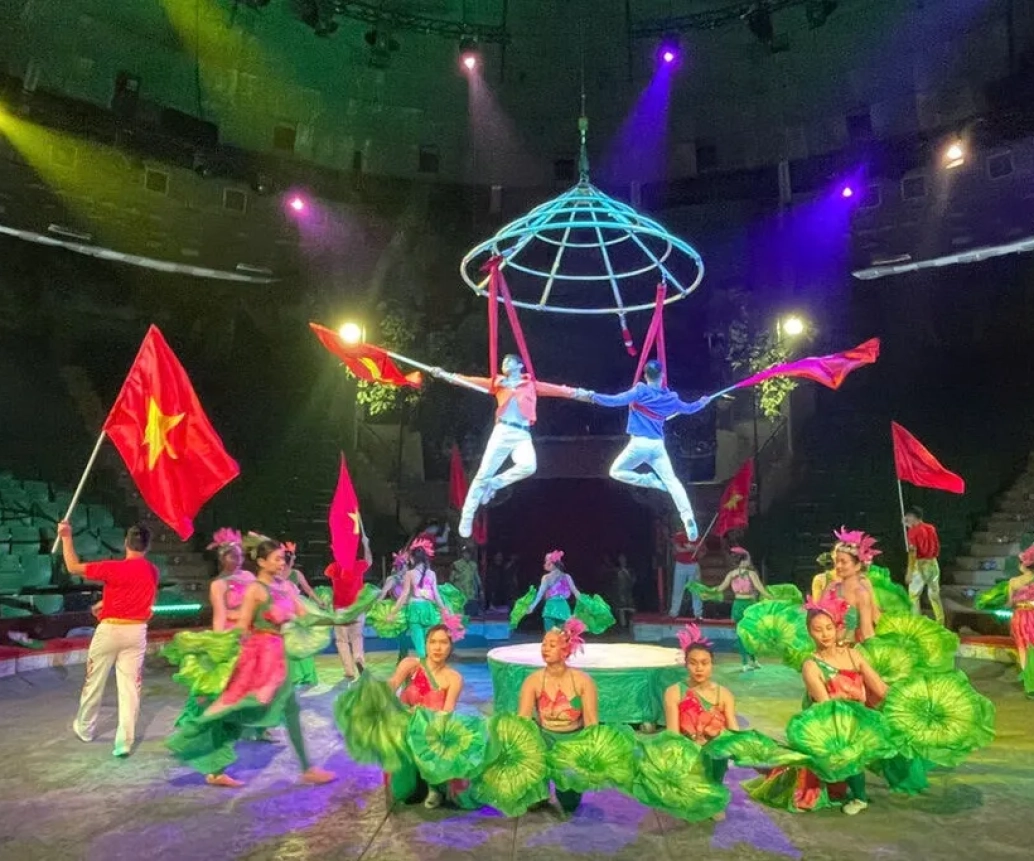
Circus Art: A Hidden Gem of Vietnam's Performing Arts
Content []
Circus Art: A Hidden Gem of Vietnam's Performing Arts
The History and Development of Vietnam Circus
The story of Vietnam circus begins with Ta Duy Hien (1889–1967), widely regarded as the founding figure of the country’s circus industry. In the early twentieth century, when traveling circus troupes from Europe and Asia were performing across the region, he gathered Vietnamese performers and established the first Vietnamese circus troupe. Their debut performance took place on December 5, 1922, on Hang Da Street in Hanoi, marking the birth of a circus tradition that carried both artistic ambition and national pride.
Although the circus originally arrived from abroad, it gradually evolved into a distinctive form of Vietnamese performing arts. Performers adapted international techniques while weaving in local storytelling, cultural expression, and Vietnamese aesthetics. Over time, Vietnam circus developed its own identity, blending physical mastery with cultural nuance.
The early generations of performers trained under extremely difficult conditions, especially during wartime. Without proper equipment, artists practiced acrobatics and balancing acts on straw mats. For aerial performances such as rope swinging, rehearsals often took place beside ponds so that if performers fell, they would land safely in the water. These improvised training methods reflected both determination and creativity in the face of limited resources.
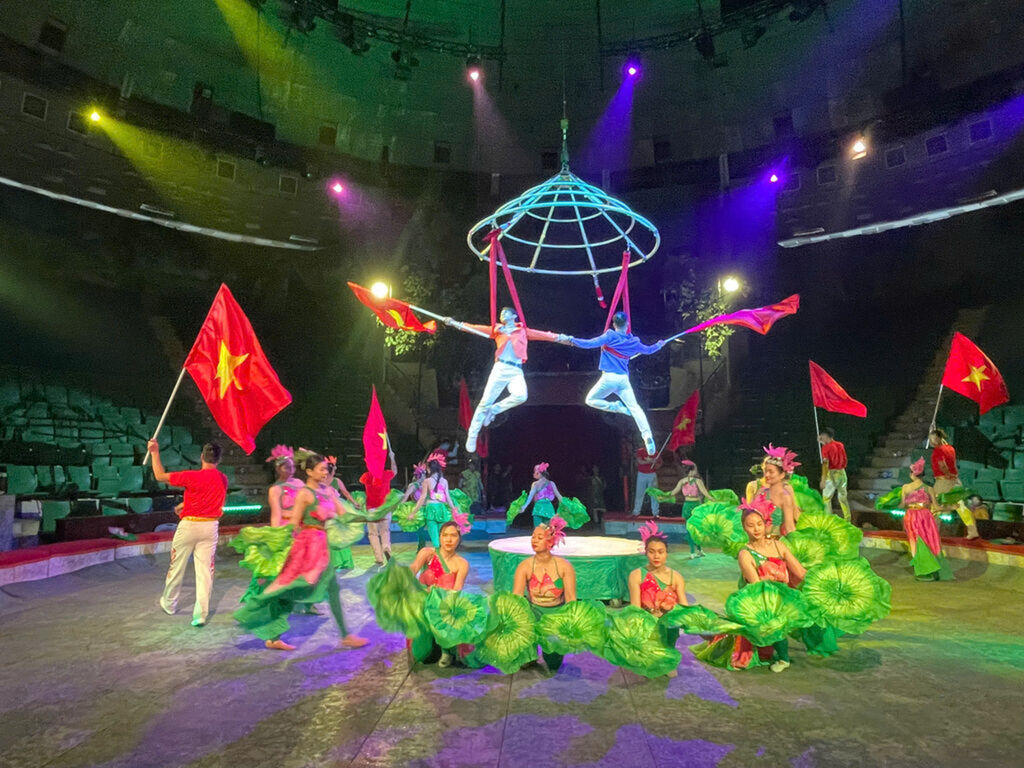
Between 1956 and 1975, the spirit of circus artists became closely tied to the resilience of the country itself. Performers continued rehearsing even during wartime evacuations. When air raid sirens sounded, they would take shelter in bunkers, then return to training once the danger passed. Despite the hardships, circus troupes traveled across regions, border areas, and islands to perform for local communities, bringing moments of joy and encouragement. Before a tour to Eastern Europe in 1967, Ho Chi Minh reminded the troupe that while Vietnam fought bravely, its circus should also perform brilliantly, showing the world that even in wartime the country continued to nurture culture and the arts.
The Brilliance and Challenges of Vietnam Circus Art
From the pioneering efforts of Ta Duy Hien, Vietnam circus has traveled through decades of transformation. In recent years, the art form has experienced a remarkable revival. Instead of presenting separate acts, many productions are now built as complete theatrical performances with cohesive storytelling, music, and stage design. Contemporary circus shows skillfully combine modern techniques with elements of Vietnamese culture, creating visually poetic performances. Works such as Lang Toi and Song Trang illustrate this new direction, blending acrobatics with bamboo props, folk music, and imagery inspired by rural life.
Alongside this creative renewal, Vietnam circus has achieved impressive recognition on the international stage. The performance Canh Chim Viet won the top prize at the Circuba International Circus Festival in 2017, highlighting the technical excellence of Vietnamese performers. In 2021, the famous acrobatic duo Giang Quoc Co and Giang Quoc Nghiep set a new Guinness World Records milestone in Spain with their breathtaking head-to-head balancing act. More recently, performances such as Du Son and De Kiem Du Day Lua received major awards at international circus competitions in Russia, further demonstrating the artistry and skill of Vietnamese performers.
Yet behind the bright lights and applause lies a profession filled with sacrifice. During the subsidy era, circus artists faced extremely difficult conditions. Salaries were modest, equipment was limited, and many props were worn or damaged. Animal performances were also difficult to maintain due to the lack of proper facilities and care. Despite these hardships, artists continued to rehearse and perform, driven by their passion for the stage.
The physical demands of circus training are equally intense. Many performers begin practicing at the age of ten, enduring years of rigorous discipline to master complex acrobatic techniques. However, the performing career is often short, as the body gradually loses its peak strength after the age of thirty. Behind every seemingly effortless performance are countless hours of training, injuries, and personal sacrifice. Stories such as Tam Chinh, who once continued performing while five months pregnant, reveal the extraordinary dedication hidden behind the curtain.
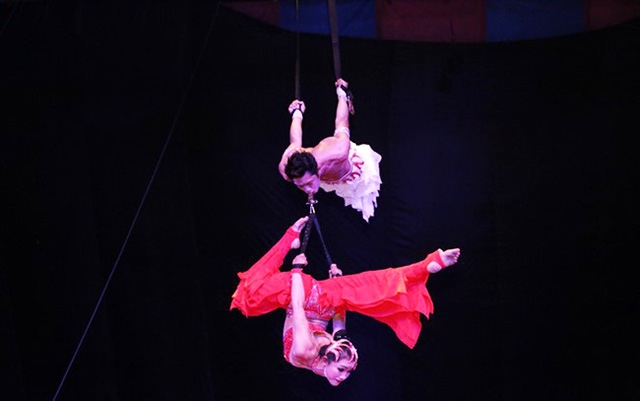
Experiencing Vietnam Circus: A Cultural Show Travelers Should Not Miss
One of the most remarkable aspects of circus art is its universal language. Unlike many traditional performances that rely heavily on dialogue or narration, circus acts communicate through movement, skill, music, and visual storytelling. Because of this, there are virtually no language barriers. Audiences from any country can easily understand and enjoy the performance.
For international travelers, the Vietnamese circus offers a fascinating window into the country’s performing arts culture. The shows combine impressive acrobatics, balance techniques, aerial performances, and comedic acts that captivate spectators of all ages. Many performances also incorporate elements of Vietnamese culture, traditional music, and creative stage design, creating an experience that is both entertaining and culturally meaningful.
Watching a circus performance in Vietnam is not only about enjoying thrilling stunts. It is also an opportunity to witness the dedication, discipline, and artistry of performers who spend years mastering their craft. For visitors looking to explore Vietnam beyond landscapes and cuisine, a circus show is a unique cultural experience that should not be missed.
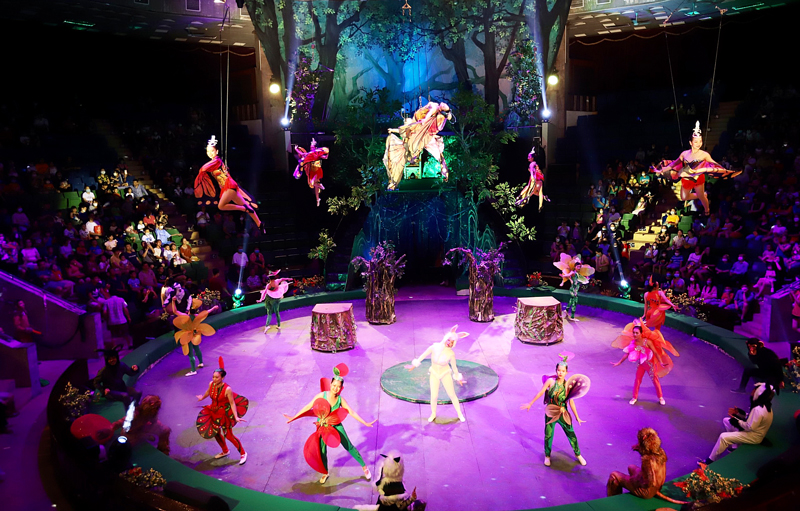
Vietnam’s circus art is more than just entertainment. It is a vibrant cultural experience that reflects the creativity, discipline, and spirit of Vietnamese performers. Thanks to its universal language of movement and visual storytelling, circus performances can captivate audiences from all over the world without any language barriers. For travelers looking to explore a different side of Vietnamese culture, attending a circus show can become a memorable highlight of the journey. With thoughtfully curated cultural experiences, ACT Travel Agent invites international visitors to discover this fascinating art form as part of a deeper and more authentic travel experience in Vietnam.
Read this next


Bat Trang pottery village a timeless craft experience near Hanoi

Quick Contact
Reviews from Customers
Please take a look at the following reviews from our customers
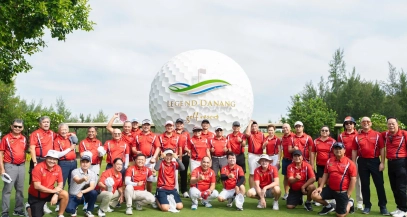
Mr Clarence- Travel President, Philippines
Vietnam | 01/14/2026
Luxury Golf Tour in Da Nang, 5days
Hi Jimy, We returned home safely today. I would like to say a special thanks to you and your team ACT TRAVEL. We really loved and satisfied with your pro services. We do love these golf courses in Da Nang. They were amazing and fantastic quality and view. We will come back here soon. I am looking foward to working together with you soon! Best regards, Mr Clarence- Travel President, Philippines
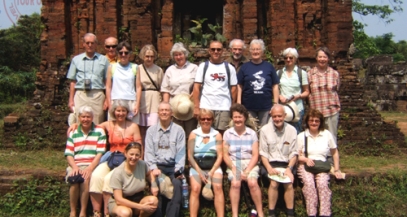
Mr. Jean Pie
United Kingdom | 10/13/2014
RAM Holidays from UK (Impressive of Vietnam 15 days)
Mr. Jean Pie – Tour Leader said “Thank you very much for doing such an excellent job on the tour. You went above and beyond for all of us and we really appreciate all your hard work. Thank you for your calm leadership through the “HAIYAN” storm, you really help us through it. Thanks to ACT Travel, we had a wonderful time and unforgettable memory”.
Mr. Navy Vang
Australia | 10/13/2014
Mandarin Group from Australia (Charming Vietnam 10 Days)
Mr. Navy Vang - Tour manager from Australia said: " Wow what a great vacation !. Thank you Mr Kelvin Pham so much. We are very grateful for everything you did for us and everything went very well. We’re safe and sound back home thinking about the joy we experienced. I've already decided that when I choose to travel again, I will go through your company. I also highly recommend ACT Travel Travel to any organization looking for a great agency. Kind regards
Mr. Ricardo - Program Manager
Brazil | 03/31/2014
DOMINGOS Group from Brazin (IMPRESSIVE VIETNAM 17 DAYS.)
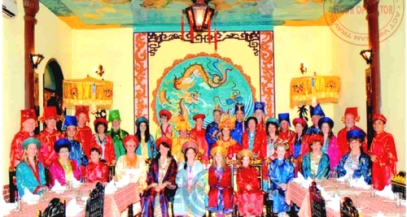
Mr. Ricardo - Program Manager said “Dear Kelvin, Thanks you very much for your well arrangement. Thank you for the updated weather information. I have traveled a lot as a geography professor and dealt with many tour operators. You are one of the best tour operators who can take so much concern and care about customers. I must congratulate you on your good organization and care to minute points. Thanks for the mobile phone you provided to us and SIM cards you provide to all of us (29 cards, I know they are not cheap), it was an excellent convenience for us. It was a brilliant idea and we really appreciated knowing there was someone we could contact at any time should we need to. We love your welcome dinner at Binh Quoi village, where we enjoyed rich traditional southern Vietnamese cuisine with musical accompaniment provided by local folk musicians. We were very interested in the traditional Vietnamese wedding in Binh Quoi and we never forget the “Gong show” in Buon Me Thuot. Once again, thank you very much for great job”.
Ms. Barbara Betts
Australia | 10/13/2014
Orbiz Group from Australia (Discover Vietnam and Cambodia 15 Days)
Ms. Barbara Betts - Escorted guide from Australia said: " Dear Kelvin I want to take this opportunity to thanks you for providing us with superb guides in Vietnam and Cambodia. Well, Manh - tour guide in Vietnam is very professional and knowledegable and you can feel very safe in allowing him to guide your tours. The drivers you provided were also friendly, capable and they too did everything for the group to be happy Thanks you Kelvin so far for a fabulous tour.
Mr. Dany
Malaysia | 10/13/2014
Teachers Group From Malaysia ( Hanoi – Halong bay – Ninh Binh 6 Days )
Mr. Dany - Escorted guide from Malaysia said: " Hi Kelvin Pham, Thanks for arranging a great trip. I wanted to let you know how pleased we were with the itinerary and all the arrangements you organized. Everything worked extremely well and went exactly as planned. The guides were very knowledgable. My favorite site was cruising on the Halong bay. The hotels were great as they were located at the heart of city. We did enjoy eating at the local restaurants as arranged by ACT. The foods were sometimes unusual, but still tasty. I loved “Pho Hanoi“ very much and I would try to cook at my home… Thanks again
Mr. Ohad
Turkey | 10/13/2014
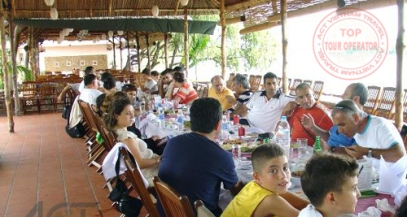
Istmaz Group from Turkey (Saigon - Mekong Delta - Cambodia - Angkor Wat 12 Days).
Mr. Ohad - The Tour Leader said: " On behalf of the entire group, I just wanted to thank both of you for all your help and outstanding execution in making our trip memorable! The entire group could not say enough great things about how well organized & smooth everything went. I really enjoyed Vietnam & Travel. Both tour guides were terrific and Angkor Wat was just amazing! All your arrangements worked out very smoothly and I consider the pilgrimage to be a great success ".
Mr. Steven
United Kingdom | 10/13/2014
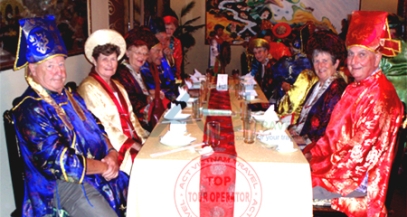
Ponila Group from UK (Higlight of Vietnam 16 Days).
Mr. Steven - Escorted guide from UK said: Our trip to Vietnam was overall a positive one. We were very happy with the level of accommodation and quality of the food at all times. We love Hanoi but Ha Long Bay is certainly one of the most beautiful places we have ever seen; the old city in Hoi An has great potential becoming a world-class tourist attraction; and citadel in Hue embodies a great deal of historic signifance, we have a lot of photos in Hue. Cruising on Mekong Delta river was so interesting and Dalat highland was very romantic. Finally, please give our thanks to the tour guides Mrs Phuong, Mr Ky and the drivers who accompanied us throughout, always accommodating to the group's requests and last minute changes in itinerary. We won't forget you!
Mr. Barrick
United States | 10/13/2014
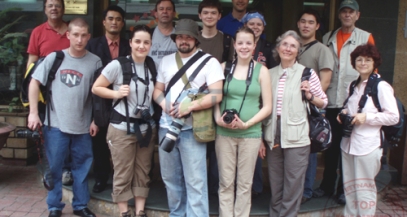
Global Alliane Group From USA (Discover Vietnam – Cambodia 10 Days)
Mr. Barrick - the Tour Leader said: " Dear ACT Team,This is to thank you, and all of those who organised and guided our visit to Vietnam & Cambodia, for a superb holiday. We had a trip of a life time. Everything we were promised happened and more. We brought back so many memories and stories. The restaurants were wonderful and the hotels were great. Mr Nguyen had such a lot of knowledge he shared with us, and had a great sense of humor. He even knew of some Cambodian slang words. The whole trip will be something we will always remember and share with our family and friends. Thanks for all your help in making it so enjoyable. We shall tell all our friends traveling to Indochina that they must use ACT Travel's services !! ".
Partner





ACT VIETNAM TRAVEL
No 3, Alley 25, Dich Vong Hau Str, Cau Giay Dist, Hanoi Capital, Vietnam
sales@vietnamtraveland.com - jimy@vietnamtraveland.com - vip@vietnamtraveland.com
License: 01-639/2015/CDLQGVN-GPLHQT
Company
Term of use
Payment Methods


