
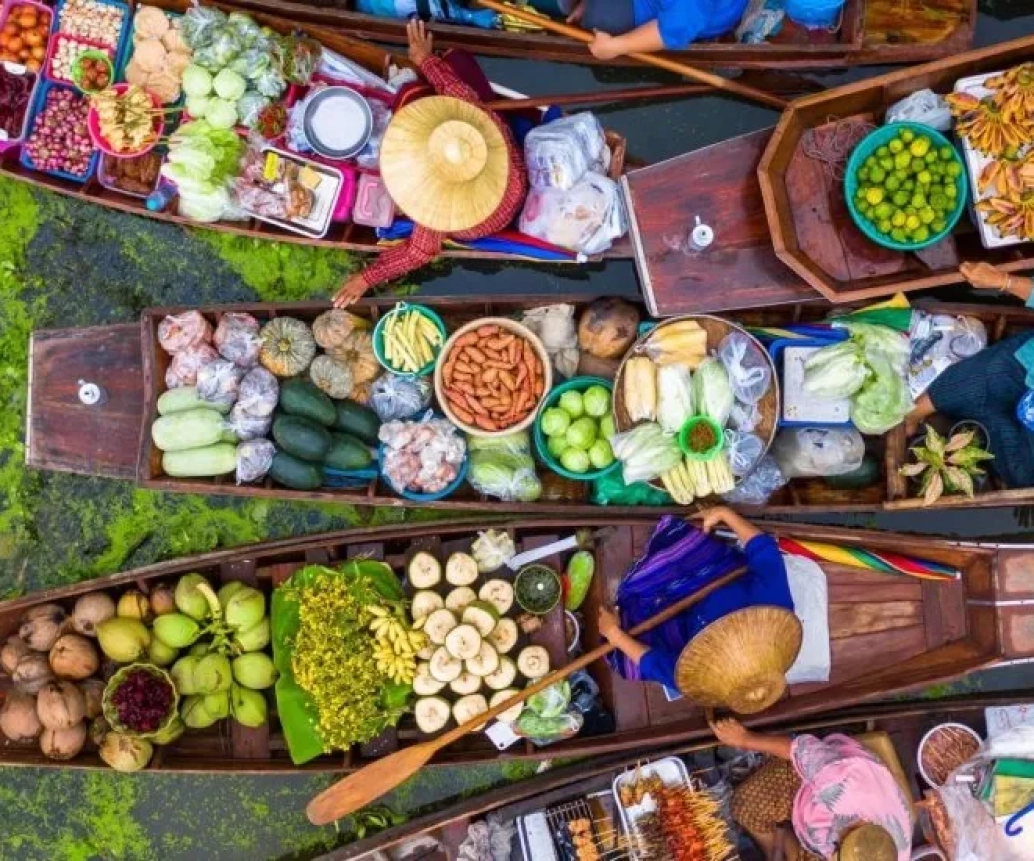
Floating Markets: The Soul of the Mekong Delta
Content []
Floating Markets: The River Culture of the Mekong Delta
The Origins of Floating Markets in the Mekong Delta
Where is the Mekong Delta?
Located in the southernmost region of Vietnam, the Mekong Delta is where the powerful Mekong River divides into a maze of rivers, canals, and small islands before emptying into the East Sea. The region shares a border with Cambodia to the northwest and lies not far from Ho Chi Minh City to the northeast.
Often referred to as Vietnam’s “rice bowl,” the Delta features vast fertile plains interwoven with waterways, creating perfect conditions for rice farming, aquaculture, and fruit orchards. Beyond its agricultural richness, the area is also celebrated for its vibrant floating markets, diverse religious traditions, rich ecosystems, and a remarkable range of local dishes.
The most pleasant time to explore the Mekong Delta is between December and April, when the weather is typically dry and sunny, offering ideal conditions for boat trips and river excursions.
The origin of floating markets in Vietnam
The exact moment when river markets first appeared in Vietnam remains something of a mystery, drifting quietly through history like the currents of the Mekong itself. What we do know is that their story is inseparable from the landscape of the Mekong Delta, a region woven together by countless rivers and canals.
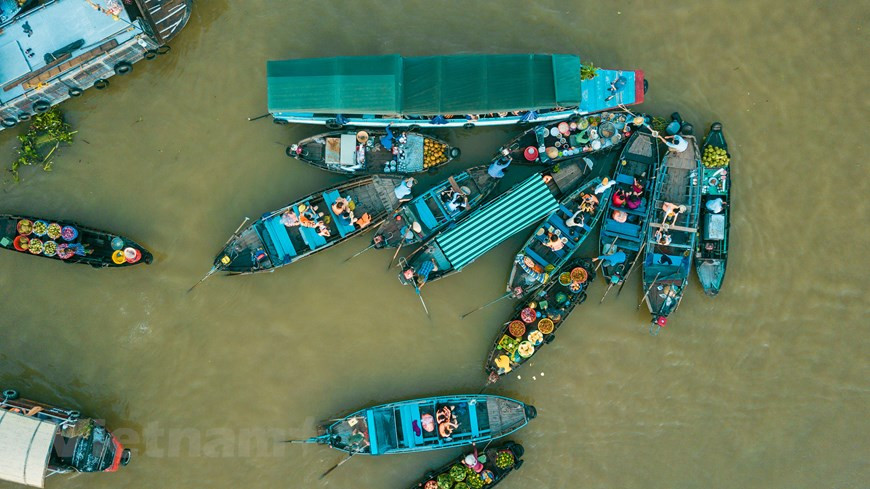
Long before highways and bridges connected the delta, waterways were the lifelines of the region. Boats carried rice, fruits, vegetables, and people from village to village, turning the rivers into natural trade routes. At busy junctions where waterways met, boats would gather to exchange goods, much like traditional markets forming at crossroads on land. Over time, these gatherings grew into vibrant river markets, where trading happened not on streets, but on gently rocking boats.
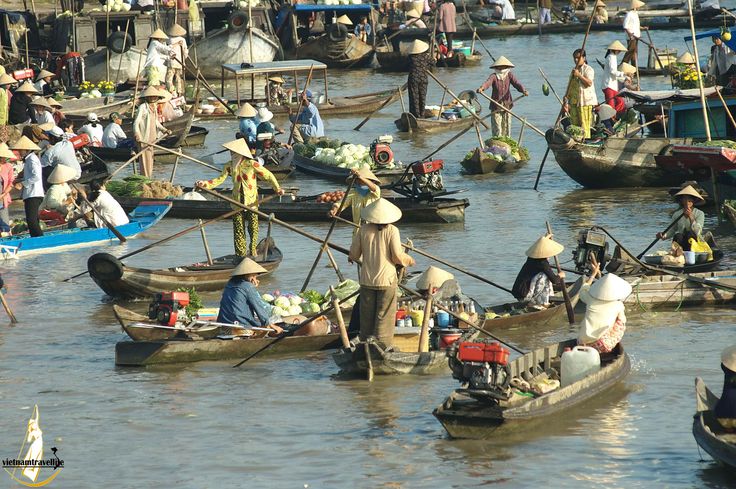
As the years passed, these floating marketplaces became more than simple trading points. They shaped an entire river culture, where daily routines, livelihoods, and community life unfolded directly on the water. Families lived and worked on their boats, merchants navigated the waterways before sunrise, and the rhythm of commerce followed the flow of the river. In the Mekong Delta, these markets did not just support life on the river. They helped define it.
River Culture: Life Built Around the Water
The Unique Traditions of Floating Markets
Imagine dozens of boats of every size gliding across the same stretch of river at dawn. Yet despite the constant movement, collisions are rare. Traders here are not only friendly merchants but also remarkably skilled boat navigators. After all, many of them have spent most of their lives on these waters, where life on the river is simply part of everyday existence.
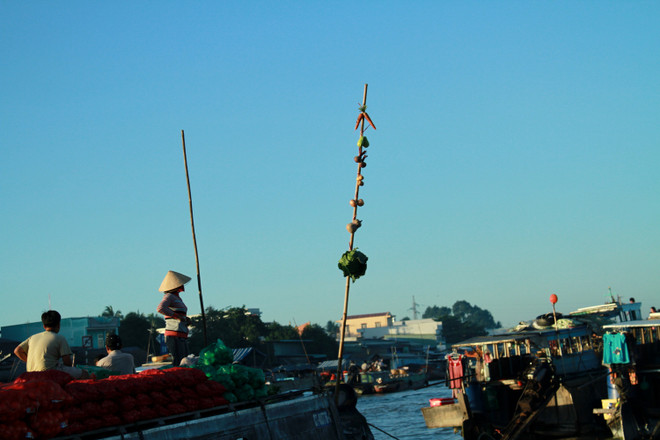
Unlike traditional markets, where colorful billboards and shop signs compete for attention, floating markets have their own ingenious form of advertising. Sellers raise a long bamboo pole, known locally as a “bẹo hàng,” and hang samples of their products high above the boat. From a distance, passing buyers can easily spot pineapples, pumpkins, coconuts, or sweet potatoes swaying gently in the breeze and steer their boats toward the right trader.
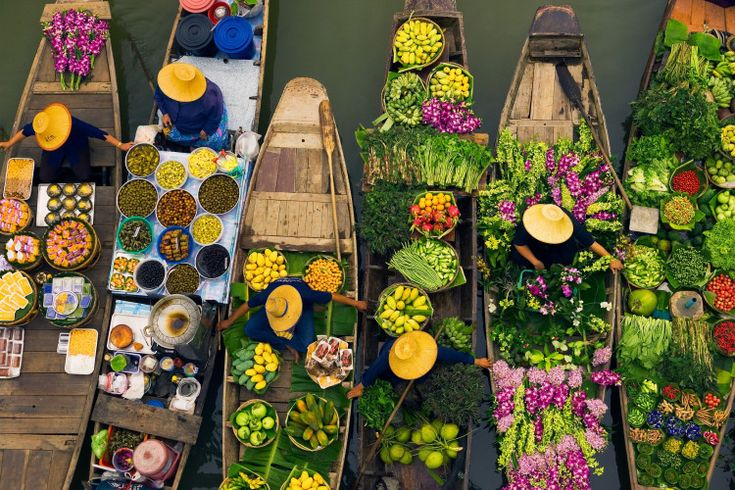
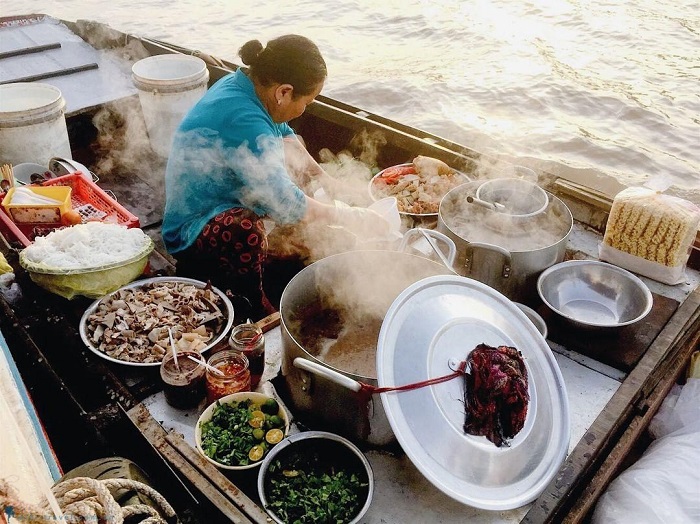
The goods sold in these floating markets usually come straight from local gardens and orchards: fresh tropical fruits, vegetables, household necessities, and other everyday products. Yet the markets are not only about trading. Visitors may also stumble upon small floating kitchens, humble boats that serve steaming bowls of noodles, hot coffee, or local breakfast dishes right on the water, adding flavor to the vibrant river culture of the region.
One such simple meal even captured the attention of the world-famous chef Gordon Ramsay. During a visit to southern Vietnam, he tasted a bowl of hủ tiếu served from a tiny boat drifting along a river in the Mekong Delta. The experience left such a strong impression that in the fourth season of the TV show MasterChef US (2013), he turned the dish into a challenge for contestants, bringing a small taste of the Mekong Delta’s river culture onto an international stage.
Life on the Boats
In the river markets of the Mekong Delta, each boat is far more than a trading vessel. It is a home, a tiny floating household where entire families live, work, and grow together. Day after day, these boats drift along the waterways, carrying not only goods but also stories, routines, and generations of life on the river. Familiar buyers return again and again, and over time, the relationship between trader and customer begins to feel less like commerce and more like neighbors meeting at the same riverside corner.
Life aboard these narrow boats can be challenging. Space is limited, and the rhythm of daily life depends on the movement of the river and the shifting locations of the markets. Yet the people who call these boats home rarely lose their warmth. Visitors are often greeted with bright smiles and easy laughter, as if the river itself has taught them patience and generosity.
Even when their English extends to just a few simple phrases, the traders are eager to talk with travelers. With gestures, smiles, and the occasional shared cup of coffee on a gently rocking boat, they proudly introduce guests to their world. Through these small exchanges, visitors begin to understand that the floating markets are not only places of trade but also living expressions of the river culture that defines the Mekong Delta.
Planning Your Visit to the Mekong Delta Floating Markets
To truly experience the magic of floating markets in the Mekong Delta, timing is everything. These markets awaken long before the sun rises, usually starting as early as 3 or 4 a.m. and gradually fading by around 9 or 10 a.m. Arriving early is not just recommended, it is essential. In those first quiet hours of dawn, the river slowly comes alive, boats gather, engines hum, and the entire scene unfolds like a morning ritual shaped by generations of life on the river.
If you happen to visit in the days leading up to Lunar New Year, the experience becomes even more special. This is the season when flowers bloom across the delta, and the markets transform into floating gardens. Boats overflow with bright marigolds, chrysanthemums, and peach blossoms, their colors reflecting on the water and turning the river into a moving canvas.
Adding to the atmosphere, festive music drifts across the waterways, creating a lively and unmistakably Vietnamese ambiance. In that moment, the river culture of the Mekong Delta feels especially vivid, where trade, tradition, and celebration blend seamlessly on the water.
More than just a unique attraction, the river markets of the Mekong Delta offer a glimpse into a way of life shaped entirely by water. From bustling early mornings to quiet moments drifting along the river, every experience reflects the richness of local river culture and the enduring rhythm of life on the river.
If you are looking to explore a side of Vietnam that feels authentic, vibrant, and deeply connected to tradition, the floating markets are a journey worth taking. Let ACT Travel Agent be your companion in discovering the beauty of the Mekong Delta, where every river tells a story and every market brings it to life.
Read this next


Bat Trang pottery village a timeless craft experience near Hanoi
Quick Contact
Reviews from Customers
Please take a look at the following reviews from our customers
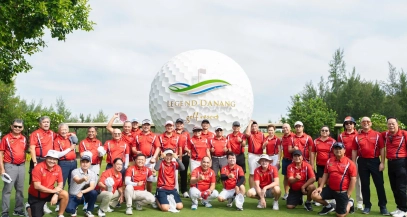
Mr Clarence- Travel President, Philippines
Vietnam | 01/14/2026
Luxury Golf Tour in Da Nang, 5days
Hi Jimy, We returned home safely today. I would like to say a special thanks to you and your team ACT TRAVEL. We really loved and satisfied with your pro services. We do love these golf courses in Da Nang. They were amazing and fantastic quality and view. We will come back here soon. I am looking foward to working together with you soon! Best regards, Mr Clarence- Travel President, Philippines
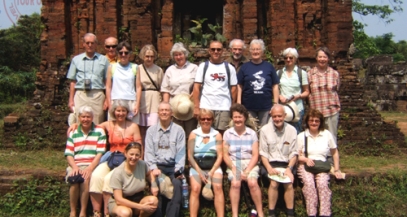
Mr. Jean Pie
United Kingdom | 10/13/2014
RAM Holidays from UK (Impressive of Vietnam 15 days)
Mr. Jean Pie – Tour Leader said “Thank you very much for doing such an excellent job on the tour. You went above and beyond for all of us and we really appreciate all your hard work. Thank you for your calm leadership through the “HAIYAN” storm, you really help us through it. Thanks to ACT Travel, we had a wonderful time and unforgettable memory”.
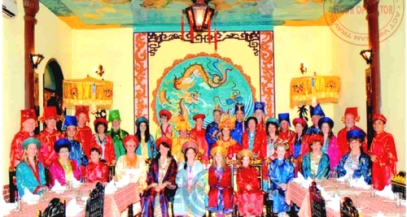
Mr. Navy Vang
Australia | 10/13/2014
Mandarin Group from Australia (Charming Vietnam 10 Days)
Mr. Navy Vang - Tour manager from Australia said: " Wow what a great vacation !. Thank you Mr Kelvin Pham so much. We are very grateful for everything you did for us and everything went very well. We’re safe and sound back home thinking about the joy we experienced. I've already decided that when I choose to travel again, I will go through your company. I also highly recommend ACT Travel Travel to any organization looking for a great agency. Kind regards
Mr. Ricardo - Program Manager
Brazil | 03/31/2014
DOMINGOS Group from Brazin (IMPRESSIVE VIETNAM 17 DAYS.)
Mr. Ricardo - Program Manager said “Dear Kelvin, Thanks you very much for your well arrangement. Thank you for the updated weather information. I have traveled a lot as a geography professor and dealt with many tour operators. You are one of the best tour operators who can take so much concern and care about customers. I must congratulate you on your good organization and care to minute points. Thanks for the mobile phone you provided to us and SIM cards you provide to all of us (29 cards, I know they are not cheap), it was an excellent convenience for us. It was a brilliant idea and we really appreciated knowing there was someone we could contact at any time should we need to. We love your welcome dinner at Binh Quoi village, where we enjoyed rich traditional southern Vietnamese cuisine with musical accompaniment provided by local folk musicians. We were very interested in the traditional Vietnamese wedding in Binh Quoi and we never forget the “Gong show” in Buon Me Thuot. Once again, thank you very much for great job”.
Ms. Barbara Betts
Australia | 10/13/2014
Orbiz Group from Australia (Discover Vietnam and Cambodia 15 Days)
Ms. Barbara Betts - Escorted guide from Australia said: " Dear Kelvin I want to take this opportunity to thanks you for providing us with superb guides in Vietnam and Cambodia. Well, Manh - tour guide in Vietnam is very professional and knowledegable and you can feel very safe in allowing him to guide your tours. The drivers you provided were also friendly, capable and they too did everything for the group to be happy Thanks you Kelvin so far for a fabulous tour.
Mr. Dany
Malaysia | 10/13/2014
Teachers Group From Malaysia ( Hanoi – Halong bay – Ninh Binh 6 Days )
Mr. Dany - Escorted guide from Malaysia said: " Hi Kelvin Pham, Thanks for arranging a great trip. I wanted to let you know how pleased we were with the itinerary and all the arrangements you organized. Everything worked extremely well and went exactly as planned. The guides were very knowledgable. My favorite site was cruising on the Halong bay. The hotels were great as they were located at the heart of city. We did enjoy eating at the local restaurants as arranged by ACT. The foods were sometimes unusual, but still tasty. I loved “Pho Hanoi“ very much and I would try to cook at my home… Thanks again
Mr. Ohad
Turkey | 10/13/2014
Istmaz Group from Turkey (Saigon - Mekong Delta - Cambodia - Angkor Wat 12 Days).
Mr. Ohad - The Tour Leader said: " On behalf of the entire group, I just wanted to thank both of you for all your help and outstanding execution in making our trip memorable! The entire group could not say enough great things about how well organized & smooth everything went. I really enjoyed Vietnam & Travel. Both tour guides were terrific and Angkor Wat was just amazing! All your arrangements worked out very smoothly and I consider the pilgrimage to be a great success ".
Mr. Steven
United Kingdom | 10/13/2014
Ponila Group from UK (Higlight of Vietnam 16 Days).
Mr. Steven - Escorted guide from UK said: Our trip to Vietnam was overall a positive one. We were very happy with the level of accommodation and quality of the food at all times. We love Hanoi but Ha Long Bay is certainly one of the most beautiful places we have ever seen; the old city in Hoi An has great potential becoming a world-class tourist attraction; and citadel in Hue embodies a great deal of historic signifance, we have a lot of photos in Hue. Cruising on Mekong Delta river was so interesting and Dalat highland was very romantic. Finally, please give our thanks to the tour guides Mrs Phuong, Mr Ky and the drivers who accompanied us throughout, always accommodating to the group's requests and last minute changes in itinerary. We won't forget you!
Mr. Barrick
United States | 10/13/2014
Global Alliane Group From USA (Discover Vietnam – Cambodia 10 Days)
Mr. Barrick - the Tour Leader said: " Dear ACT Team,This is to thank you, and all of those who organised and guided our visit to Vietnam & Cambodia, for a superb holiday. We had a trip of a life time. Everything we were promised happened and more. We brought back so many memories and stories. The restaurants were wonderful and the hotels were great. Mr Nguyen had such a lot of knowledge he shared with us, and had a great sense of humor. He even knew of some Cambodian slang words. The whole trip will be something we will always remember and share with our family and friends. Thanks for all your help in making it so enjoyable. We shall tell all our friends traveling to Indochina that they must use ACT Travel's services !! ".
Partner




ACT VIETNAM TRAVEL
No 3, Alley 25, Dich Vong Hau Str, Cau Giay Dist, Hanoi Capital, Vietnam
sales@vietnamtraveland.com - jimy@vietnamtraveland.com - vip@vietnamtraveland.com
License: 01-639/2015/CDLQGVN-GPLHQT
Company
Term of use
Payment Methods


