
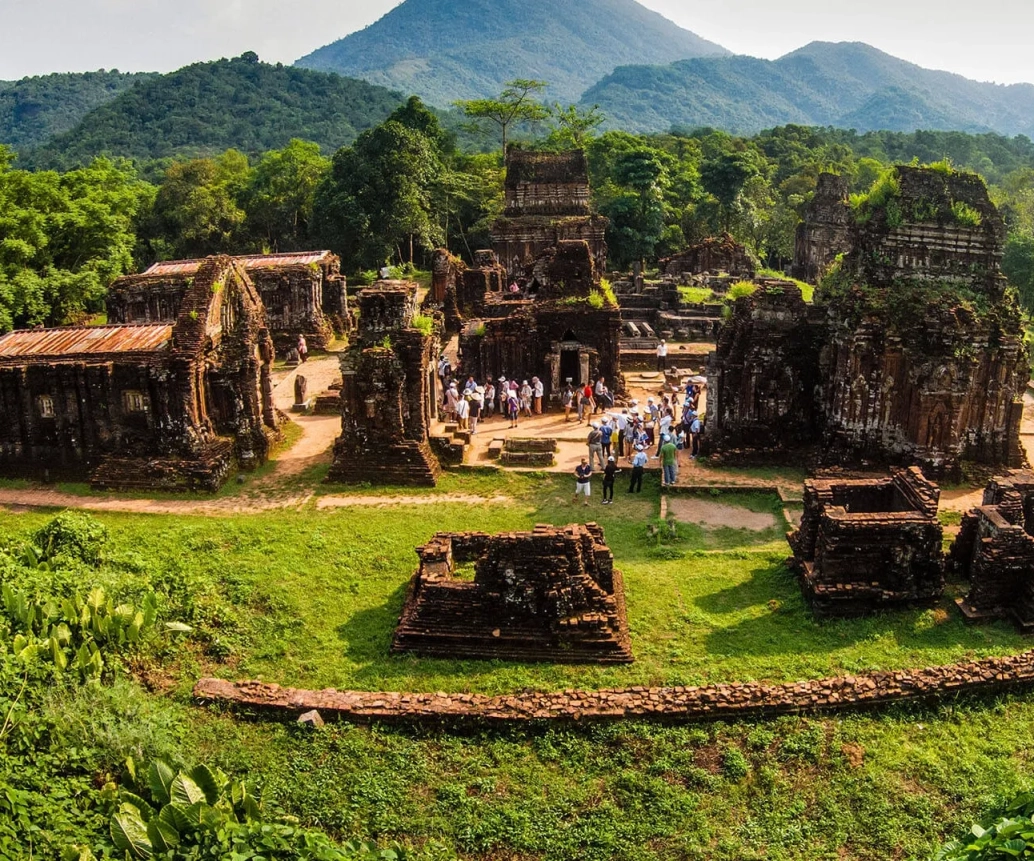
My Son Sanctuary: A UNESCO World Heritage Site of the Ancient Champa Kingdom
Content []
My Son Sanctuary: A UNESCO World Heritage Site of the Ancient Champa Kingdom
Where Is My Son Sanctuary and How to Get There?
Hidden in a peaceful valley of central Vietnam, My Son Sanctuary is located in Duy Phu Commune, Duy Xuyen District, Quang Nam Province. The site lies about 69 km from Da Nang and around 45 km from Hoi An, making it a popular stop for travelers interested in exploring cultural heritage in Vietnam.
Surrounded by lush mountains and positioned near the upper stream of the sacred Thu Bon River, My Son Sanctuary sits in a remarkably tranquil landscape. This remote valley once served as an important religious center of the Champa Kingdom, where temples were built to worship Hindu deities and celebrate royal ceremonies.
Because the area around My Son Sanctuary remains relatively quiet and less developed in terms of accommodation, most travelers prefer to explore the site as a half-day trip while staying in Hoi An or Da Nang. This makes it easy to combine the ancient temples of My Son Sanctuary with the lantern-lit charm of Hoi An Ancient Town, creating a rich cultural journey through one of the most fascinating UNESCO World Heritage Site destinations in Vietnam.
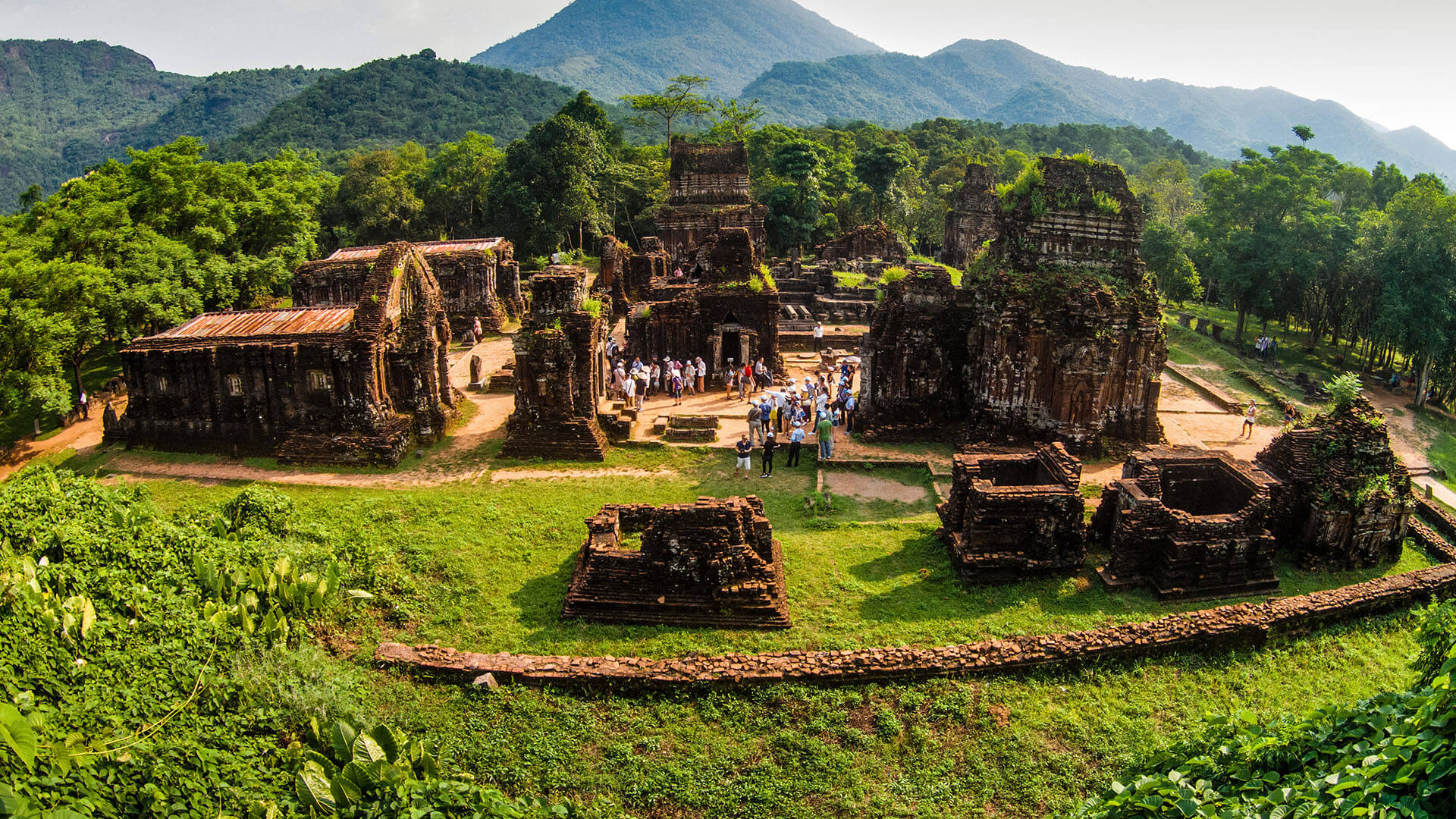
The History of My Son Sanctuary and the Champa Kingdom
Tucked inside a quiet valley of central Vietnam, My Son Sanctuary once stood at the spiritual heart of the Champa Kingdom. Built between the 4th and 13th centuries, the complex originally included around 70 temple towers and religious structures made from brick and stone. For centuries, this sacred site served as the most important religious center of the Champa civilization, where kings organized ceremonies and offerings dedicated to the Hindu god Shiva.
The temples were not only places of worship but also symbols of royal power and spiritual devotion. Each tower was constructed to honor Shiva, reflecting the deep influence of Hinduism in the culture of the Champa Kingdom. Despite centuries of weather, war, and time, many of these structures still stand today, preserving a remarkable chapter of cultural heritage in Vietnam. In recognition of its historical and cultural significance, My Son Sanctuary was officially recognized as a UNESCO World Heritage Site in 1999.
What fascinates visitors even more is the extraordinary craftsmanship behind the temples. One of the greatest mysteries lies in the brick construction technique used by Champa builders. The red bricks appear to fit together seamlessly without visible mortar, yet the structures have remained durable for centuries. Scholars and architects still study this technique today, trying to understand how the ancient builders achieved such precision.
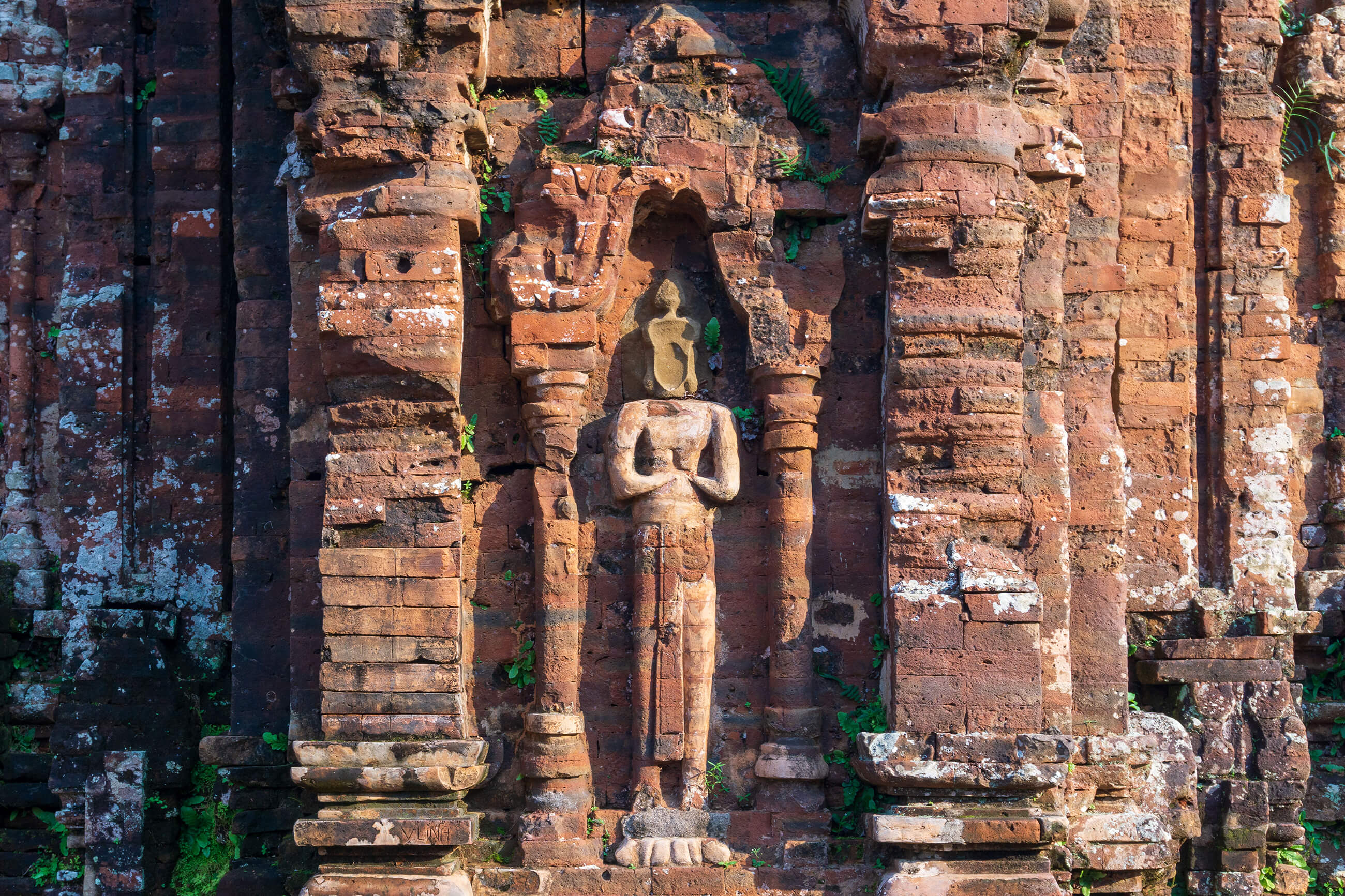
The layout of My Son Sanctuary also reflects Hindu cosmology. The temples were arranged according to a Mandala-inspired plan, with the main tower, known as the Kalan, symbolizing Mount Meru, the sacred center of the universe in Hindu belief. Surrounding towers and smaller structures represent the cosmic order, creating a spiritual landscape rather than simply a collection of buildings.
Equally impressive are the delicate carvings that decorate the temple walls. Visitors can spot detailed sculptures of Hindu deities such as Ganesha and Vishnu, along with graceful Apsara dancers and sacred animals. These artistic details reveal the sophistication of Champa sculpture and provide a glimpse into the spiritual and artistic world of one of Southeast Asia’s most fascinating ancient civilizations.
Why My Son Sanctuary Was Recognized as a UNESCO World Heritage Site
When travelers visit My Son Sanctuary, many are surprised to learn that this quiet valley of ancient brick towers is actually one of the most important cultural treasures in Vietnam. In 1999, the site was officially recognized by UNESCO as a UNESCO World Heritage Site, placing it among the world’s most valuable historical landmarks.
One reason for this recognition lies in the fascinating cultural exchange reflected in the architecture. The temples of My Son Sanctuary show how local Champa traditions blended with Hindu religious ideas that arrived from India centuries ago. As you walk among the red-brick towers, you will notice carvings of Hindu deities, sacred symbols, and graceful dancers that reveal this unique meeting of civilizations.
Another reason is that the sanctuary offers one of the clearest surviving windows into the ancient Champa Kingdom. For many centuries, Champa flourished along the central coast of Vietnam, developing a rich culture influenced by trade, religion, and art. Although time and war have damaged many structures, the remaining temples still tell the story of a powerful civilization that once thrived here.
Today, exploring My Son Sanctuary is not only a journey through beautiful ruins hidden among jungle-covered hills. It is also a chance to experience one of the most remarkable pieces of cultural heritage in Vietnam, where history, spirituality, and architecture come together in a way that few places in Southeast Asia can match.
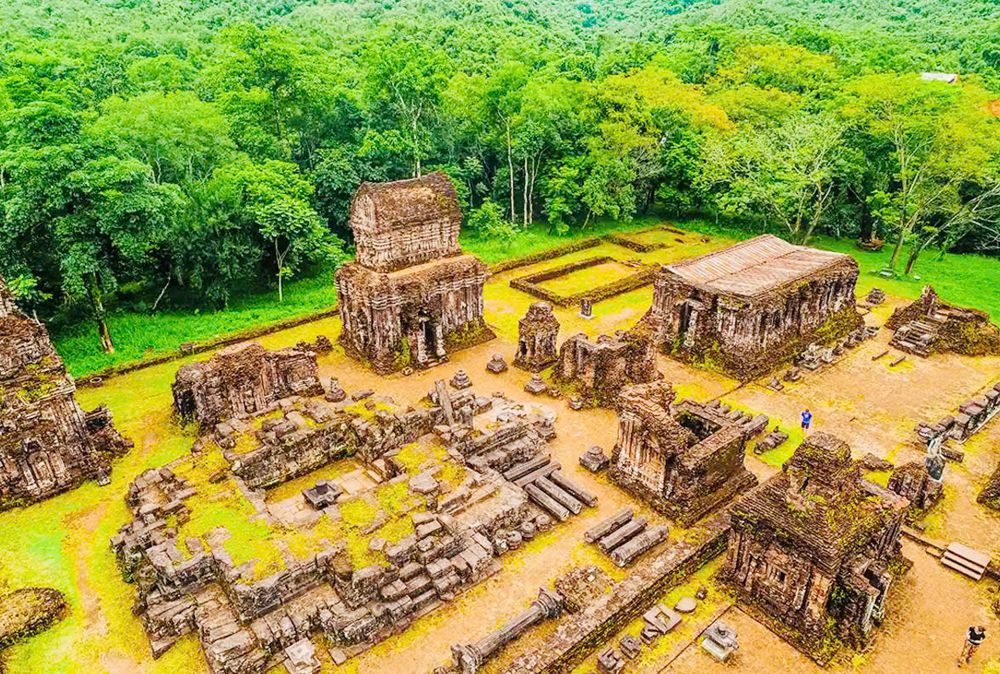
What to Experience When Visiting My Son Sanctuary
My Son Museum
Before stepping deeper into My Son Sanctuary, it is worth making a short stop at the small museum located just after the ticket gate. Though modest in size, this museum offers a helpful introduction to the history and meaning behind the ancient temple complex.
Inside, visitors will find informative displays, historical photographs, maps, and illustrated panels that explain the origins of My Son Sanctuary, the development of the Champa Kingdom, and the architectural significance of the temples scattered across the valley. For travelers exploring independently without a guide, these exhibits provide valuable context that makes the later walk through the ruins much more meaningful.
One practical tip to remember: visit the museum first. The museum usually closes about thirty minutes earlier than the main archaeological site, so stopping here at the beginning ensures you won’t miss the chance to learn the fascinating background of this remarkable UNESCO World Heritage Site before beginning your journey through the ancient towers.
Apsara Dance Performances
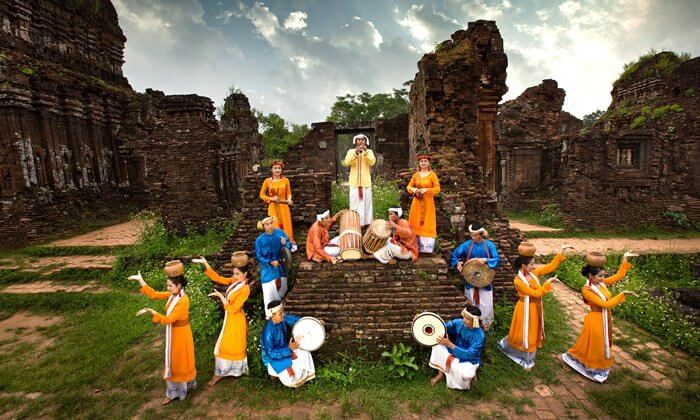
Beyond the ancient towers and intricate carvings, visitors to My Son Sanctuary can also experience the living spirit of Cham culture through traditional performances. Every afternoon, graceful dancers bring the legendary Apsara dance to life in a small open performance space within the complex.
These performances recreate classical dances from the time of the Champa Kingdom, including movements inspired by the Hindu god Shiva and the celestial Apsara dancers often depicted in ancient Cham sculptures. The choreography is delicate and expressive, with flowing hand gestures, slow rhythmic steps, and colorful traditional costumes.
Accompanied by traditional Cham music, the dances feel almost timeless. Watching the performers move gracefully among the temple ruins creates a special atmosphere where history, art, and spirituality blend together. For many travelers exploring this remarkable UNESCO World Heritage Site, the Apsara dance becomes one of the most memorable cultural moments of the entire visit.
Kate Festival Celebrations
If you happen to visit My Son Sanctuary in early October, you may witness one of the most vibrant celebrations of the Cham people: the Kate Festival. Known locally as Mbang Kate, this three-day festival is the most important cultural event of the year for the Cham community, honoring ancient kings, national heroes, and beloved ancestors.
During the festival, the quiet valley of My Son Sanctuary comes alive with color and music. Local people arrive wearing bright traditional costumes, while the sound of drums and ceremonial songs echoes through the historic temple grounds once associated with the Champa Kingdom. Ritual offerings, traditional dances, and joyful gatherings create an atmosphere that feels both sacred and festive.
For travelers interested in cultural heritage in Vietnam, attending the Kate Festival offers a rare glimpse into living Cham traditions. It transforms a visit to this ancient UNESCO World Heritage Site into something deeper than sightseeing. It becomes a cultural encounter that connects the temples of the past with the people who still carry their traditions today.
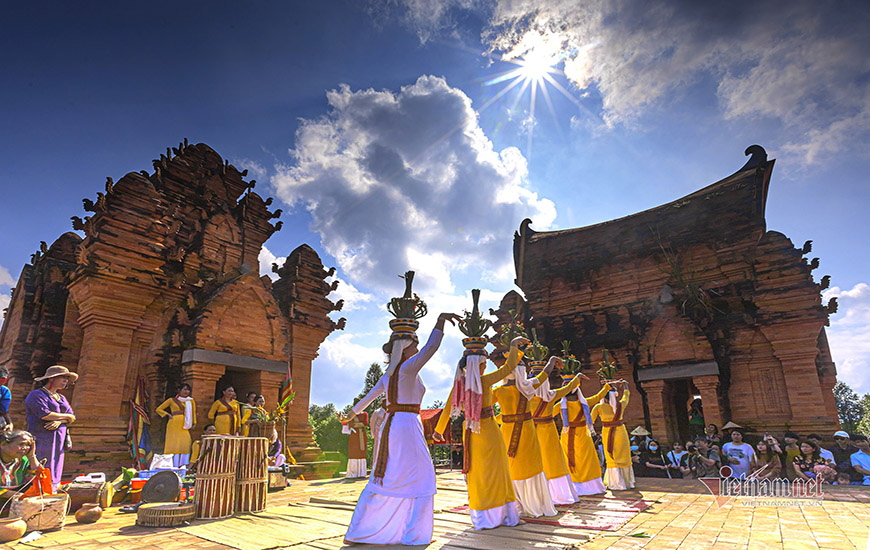
A visit to My Son Sanctuary offers travelers a rare chance to step into the ancient world of the Champa Kingdom and explore one of Vietnam’s most remarkable cultural heritage sites. From mysterious brick temples to traditional Cham performances, the experience reveals a fascinating layer of Vietnam’s history that many travelers don’t expect.
If you are planning to visit My Son Sanctuary, ACT Travel Agent can help arrange convenient tours and transportation so you can explore this UNESCO World Heritage Site comfortably and make the most of your journey in central Vietnam.
Read this next


Dong Van Stone Plateau recognised as world geopark
Quick Contact
Reviews from Customers
Please take a look at the following reviews from our customers
Mr Clarence- Travel President, Philippines
Vietnam | 01/14/2026
Luxury Golf Tour in Da Nang, 5days
Hi Jimy, We returned home safely today. I would like to say a special thanks to you and your team ACT TRAVEL. We really loved and satisfied with your pro services. We do love these golf courses in Da Nang. They were amazing and fantastic quality and view. We will come back here soon. I am looking foward to working together with you soon! Best regards, Mr Clarence- Travel President, Philippines
Mr. Jean Pie
United Kingdom | 10/13/2014
RAM Holidays from UK (Impressive of Vietnam 15 days)
Mr. Jean Pie – Tour Leader said “Thank you very much for doing such an excellent job on the tour. You went above and beyond for all of us and we really appreciate all your hard work. Thank you for your calm leadership through the “HAIYAN” storm, you really help us through it. Thanks to ACT Travel, we had a wonderful time and unforgettable memory”.
Mr. Navy Vang
Australia | 10/13/2014
Mandarin Group from Australia (Charming Vietnam 10 Days)
Mr. Navy Vang - Tour manager from Australia said: " Wow what a great vacation !. Thank you Mr Kelvin Pham so much. We are very grateful for everything you did for us and everything went very well. We’re safe and sound back home thinking about the joy we experienced. I've already decided that when I choose to travel again, I will go through your company. I also highly recommend ACT Travel Travel to any organization looking for a great agency. Kind regards
Mr. Ricardo - Program Manager
Brazil | 03/31/2014
DOMINGOS Group from Brazin (IMPRESSIVE VIETNAM 17 DAYS.)
Mr. Ricardo - Program Manager said “Dear Kelvin, Thanks you very much for your well arrangement. Thank you for the updated weather information. I have traveled a lot as a geography professor and dealt with many tour operators. You are one of the best tour operators who can take so much concern and care about customers. I must congratulate you on your good organization and care to minute points. Thanks for the mobile phone you provided to us and SIM cards you provide to all of us (29 cards, I know they are not cheap), it was an excellent convenience for us. It was a brilliant idea and we really appreciated knowing there was someone we could contact at any time should we need to. We love your welcome dinner at Binh Quoi village, where we enjoyed rich traditional southern Vietnamese cuisine with musical accompaniment provided by local folk musicians. We were very interested in the traditional Vietnamese wedding in Binh Quoi and we never forget the “Gong show” in Buon Me Thuot. Once again, thank you very much for great job”.
Ms. Barbara Betts
Australia | 10/13/2014
Orbiz Group from Australia (Discover Vietnam and Cambodia 15 Days)
Ms. Barbara Betts - Escorted guide from Australia said: " Dear Kelvin I want to take this opportunity to thanks you for providing us with superb guides in Vietnam and Cambodia. Well, Manh - tour guide in Vietnam is very professional and knowledegable and you can feel very safe in allowing him to guide your tours. The drivers you provided were also friendly, capable and they too did everything for the group to be happy Thanks you Kelvin so far for a fabulous tour.
Mr. Dany
Malaysia | 10/13/2014
Teachers Group From Malaysia ( Hanoi – Halong bay – Ninh Binh 6 Days )
Mr. Dany - Escorted guide from Malaysia said: " Hi Kelvin Pham, Thanks for arranging a great trip. I wanted to let you know how pleased we were with the itinerary and all the arrangements you organized. Everything worked extremely well and went exactly as planned. The guides were very knowledgable. My favorite site was cruising on the Halong bay. The hotels were great as they were located at the heart of city. We did enjoy eating at the local restaurants as arranged by ACT. The foods were sometimes unusual, but still tasty. I loved “Pho Hanoi“ very much and I would try to cook at my home… Thanks again
Mr. Ohad
Turkey | 10/13/2014
Istmaz Group from Turkey (Saigon - Mekong Delta - Cambodia - Angkor Wat 12 Days).
Mr. Ohad - The Tour Leader said: " On behalf of the entire group, I just wanted to thank both of you for all your help and outstanding execution in making our trip memorable! The entire group could not say enough great things about how well organized & smooth everything went. I really enjoyed Vietnam & Travel. Both tour guides were terrific and Angkor Wat was just amazing! All your arrangements worked out very smoothly and I consider the pilgrimage to be a great success ".
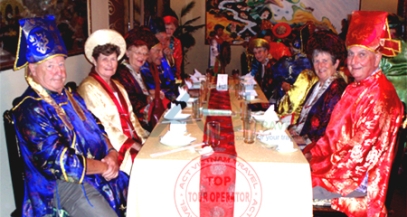
Mr. Steven
United Kingdom | 10/13/2014
Ponila Group from UK (Higlight of Vietnam 16 Days).
Mr. Steven - Escorted guide from UK said: Our trip to Vietnam was overall a positive one. We were very happy with the level of accommodation and quality of the food at all times. We love Hanoi but Ha Long Bay is certainly one of the most beautiful places we have ever seen; the old city in Hoi An has great potential becoming a world-class tourist attraction; and citadel in Hue embodies a great deal of historic signifance, we have a lot of photos in Hue. Cruising on Mekong Delta river was so interesting and Dalat highland was very romantic. Finally, please give our thanks to the tour guides Mrs Phuong, Mr Ky and the drivers who accompanied us throughout, always accommodating to the group's requests and last minute changes in itinerary. We won't forget you!
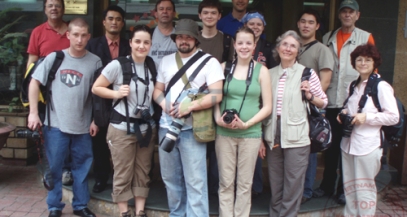
Mr. Barrick
United States | 10/13/2014
Global Alliane Group From USA (Discover Vietnam – Cambodia 10 Days)
Mr. Barrick - the Tour Leader said: " Dear ACT Team,This is to thank you, and all of those who organised and guided our visit to Vietnam & Cambodia, for a superb holiday. We had a trip of a life time. Everything we were promised happened and more. We brought back so many memories and stories. The restaurants were wonderful and the hotels were great. Mr Nguyen had such a lot of knowledge he shared with us, and had a great sense of humor. He even knew of some Cambodian slang words. The whole trip will be something we will always remember and share with our family and friends. Thanks for all your help in making it so enjoyable. We shall tell all our friends traveling to Indochina that they must use ACT Travel's services !! ".
Partner




ACT VIETNAM TRAVEL
No 3, Alley 25, Dich Vong Hau Str, Cau Giay Dist, Hanoi Capital, Vietnam
sales@vietnamtraveland.com - jimy@vietnamtraveland.com - vip@vietnamtraveland.com
License: 01-639/2015/CDLQGVN-GPLHQT
Company
Term of use
Payment Methods


