
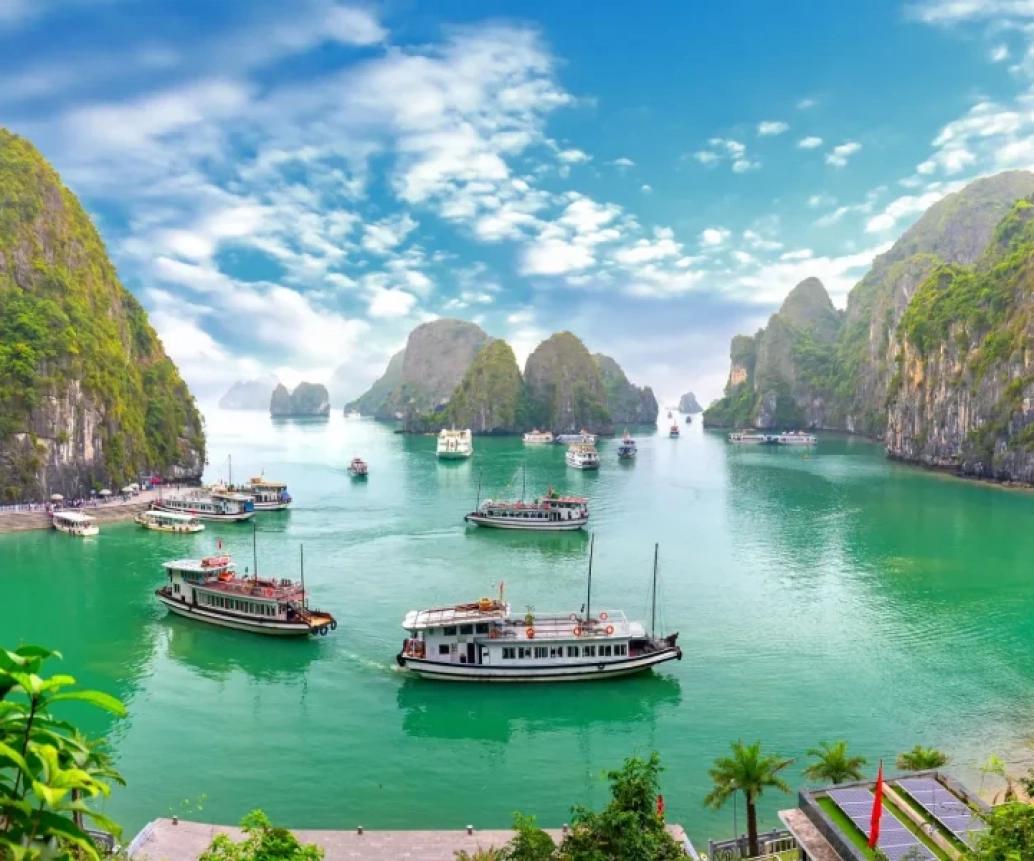
Ha Long Bay: Where time slows down on Vietnam’s emerald sea
Content []
A landscape shaped by nature and legend
Ha Long Bay lies in Quang Ninh Province, roughly three hours from Hanoi by road. The bay is famous for its thousands of limestone karsts and islets, formed over millions of years through geological processes. Wind, water, and time have carved arches, caves, and hidden lagoons into these islands, creating a landscape that feels both dramatic and harmonious.
The name “Ha Long” means “Descending Dragon,” inspired by a Vietnamese legend in which dragons were sent from the heavens to protect the land. According to the story, the dragons spat out jewels and jade, which became the islands and mountains that now fill the bay. Whether taken as myth or metaphor, the legend reflects how deeply Ha Long Bay is woven into Vietnamese cultural imagination.
Experiencing Ha Long Bay at the right pace
Ha Long Bay is not a destination meant to be rushed. While day trips are possible, most travelers find that an overnight cruise offers a far more rewarding experience.
Life on the water
Cruise journeys typically begin at the harbor and move gradually into the heart of the bay. As the boat glides between limestone formations, daily life seems to slow down. Mornings are quiet, often accompanied by mist drifting across the water, while afternoons invite gentle exploration.
Onboard activities usually include kayaking, visiting caves, or stopping at small islands. Even simple moments—such as enjoying a meal on deck or watching the sunset—become memorable against the backdrop of the bay.
Kayaking and close encounters
Kayaking allows travelers to experience Ha Long Bay from a more intimate perspective. Paddling into sheltered lagoons or beneath low rock arches brings visitors closer to the natural details of the landscape. The water is generally calm, making kayaking suitable even for beginners.
Caves, islands and hidden corners
Ha Long Bay is home to several well-known caves, each with its own atmosphere. Sung Sot Cave, for example, features large chambers and elevated viewpoints, while Thien Cung Cave is admired for its intricate rock formations. These caves reveal another side of the bay—one shaped not by open water, but by darkness, texture, and silence.
Beyond the caves, floating fishing villages provide insight into a way of life that has existed on the bay for generations. Although modern changes have influenced these communities, they remain an important cultural element of Ha Long Bay’s identity.
Seasonal beauty: When to visit Ha Long Bay
Ha Long Bay offers different moods throughout the year, and each season appeals to different types of travelers.
Spring (March–April): Comfortable temperatures and gentle sunshine make this a pleasant time for cruising and outdoor activities.
Summer (May–August): Warm weather brings vibrant colors and clear visibility, though occasional storms may affect itineraries.
Autumn (September–November): Often considered the most balanced season, with stable weather and clear skies.
Winter (December–February): Cooler air and light mist create a quiet, almost poetic atmosphere, ideal for photography and relaxation.
Rather than focusing on a single “best” time, travelers are encouraged to choose a season that matches their travel style.
Food and dining on the Bay
Meals are an essential part of the Ha Long Bay experience, especially on overnight cruises. Fresh seafood is the highlight, often including squid, shrimp, fish, and clams sourced from nearby waters. Dishes are typically prepared in a simple Vietnamese style that emphasizes freshness rather than strong seasoning.
Many cruises also serve a mix of Vietnamese and international cuisine, making dining comfortable for inbound travelers with diverse tastes. Enjoying a meal while surrounded by limestone islands and open water adds a sense of occasion that cannot be replicated on land.
Getting there and practical travel tips
Most visitors travel to Ha Long Bay from Hanoi, with a journey time of approximately 2.5 to 3 hours via modern highways. Transportation options include shuttle buses, private cars, and limousine vans arranged by cruise operators or travel agencies.
When choosing a cruise, travelers should consider:
Cruise duration (day trip vs. overnight)
Group size and comfort level
Included activities and itinerary
Environmental and safety standards
Reputable operators provide clear schedules, experienced guides and reliable services, ensuring a smooth experience for international visitors.
Quieter alternatives around Ha Long Bay
As Ha Long Bay grows in popularity, nearby areas such as Lan Ha Bay and Bai Tu Long Bay have emerged as attractive alternatives. These bays share similar landscapes but offer a more tranquil atmosphere, appealing to travelers who prefer fewer crowds and a stronger focus on nature.
Why Ha Long Bay leaves a lasting impression
Ha Long Bay is not defined by a single attraction or activity. Its true appeal lies in the overall experience—the gentle movement of the boat, the changing light on the water, and the quiet moments between destinations. It is a place where travelers naturally slow down, observe, and reflect.
For inbound tourism to Vietnam, Ha Long Bay represents a perfect balance between accessibility and authenticity. Whether paired with a cultural journey in Hanoi or explored as a standalone retreat, Ha Long Bay offers an experience that feels both timeless and deeply personal.
In the end, Ha Long Bay is not just something to see—it is something to feel.
Read this next


Dong Van Stone Plateau recognised as world geopark

Quick Contact
Reviews from Customers
Please take a look at the following reviews from our customers
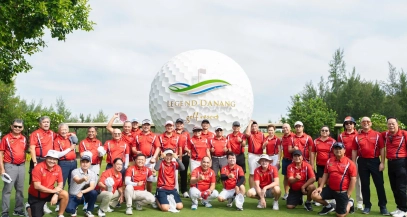
Mr Clarence- Travel President, Philippines
Vietnam | 01/14/2026
Luxury Golf Tour in Da Nang, 5days
Hi Jimy, We returned home safely today. I would like to say a special thanks to you and your team ACT TRAVEL. We really loved and satisfied with your pro services. We do love these golf courses in Da Nang. They were amazing and fantastic quality and view. We will come back here soon. I am looking foward to working together with you soon! Best regards, Mr Clarence- Travel President, Philippines
Mr. Jean Pie
United Kingdom | 10/13/2014
RAM Holidays from UK (Impressive of Vietnam 15 days)
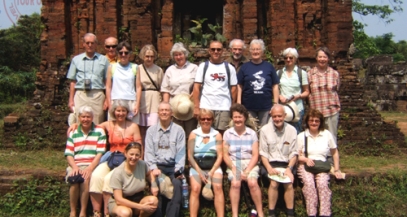
Mr. Jean Pie – Tour Leader said “Thank you very much for doing such an excellent job on the tour. You went above and beyond for all of us and we really appreciate all your hard work. Thank you for your calm leadership through the “HAIYAN” storm, you really help us through it. Thanks to ACT Travel, we had a wonderful time and unforgettable memory”.
Mr. Navy Vang
Australia | 10/13/2014
Mandarin Group from Australia (Charming Vietnam 10 Days)
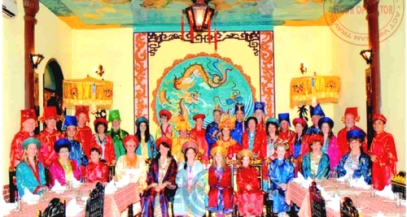
Mr. Navy Vang - Tour manager from Australia said: " Wow what a great vacation !. Thank you Mr Kelvin Pham so much. We are very grateful for everything you did for us and everything went very well. We’re safe and sound back home thinking about the joy we experienced. I've already decided that when I choose to travel again, I will go through your company. I also highly recommend ACT Travel Travel to any organization looking for a great agency. Kind regards
Mr. Ricardo - Program Manager
Brazil | 03/31/2014
DOMINGOS Group from Brazin (IMPRESSIVE VIETNAM 17 DAYS.)
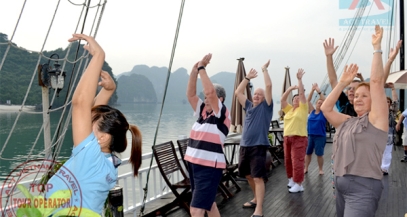
Mr. Ricardo - Program Manager said “Dear Kelvin, Thanks you very much for your well arrangement. Thank you for the updated weather information. I have traveled a lot as a geography professor and dealt with many tour operators. You are one of the best tour operators who can take so much concern and care about customers. I must congratulate you on your good organization and care to minute points. Thanks for the mobile phone you provided to us and SIM cards you provide to all of us (29 cards, I know they are not cheap), it was an excellent convenience for us. It was a brilliant idea and we really appreciated knowing there was someone we could contact at any time should we need to. We love your welcome dinner at Binh Quoi village, where we enjoyed rich traditional southern Vietnamese cuisine with musical accompaniment provided by local folk musicians. We were very interested in the traditional Vietnamese wedding in Binh Quoi and we never forget the “Gong show” in Buon Me Thuot. Once again, thank you very much for great job”.

Ms. Barbara Betts
Australia | 10/13/2014
Orbiz Group from Australia (Discover Vietnam and Cambodia 15 Days)
Ms. Barbara Betts - Escorted guide from Australia said: " Dear Kelvin I want to take this opportunity to thanks you for providing us with superb guides in Vietnam and Cambodia. Well, Manh - tour guide in Vietnam is very professional and knowledegable and you can feel very safe in allowing him to guide your tours. The drivers you provided were also friendly, capable and they too did everything for the group to be happy Thanks you Kelvin so far for a fabulous tour.
Mr. Dany
Malaysia | 10/13/2014
Teachers Group From Malaysia ( Hanoi – Halong bay – Ninh Binh 6 Days )
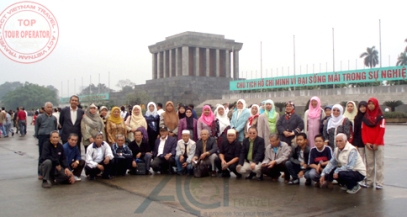
Mr. Dany - Escorted guide from Malaysia said: " Hi Kelvin Pham, Thanks for arranging a great trip. I wanted to let you know how pleased we were with the itinerary and all the arrangements you organized. Everything worked extremely well and went exactly as planned. The guides were very knowledgable. My favorite site was cruising on the Halong bay. The hotels were great as they were located at the heart of city. We did enjoy eating at the local restaurants as arranged by ACT. The foods were sometimes unusual, but still tasty. I loved “Pho Hanoi“ very much and I would try to cook at my home… Thanks again
Mr. Ohad
Turkey | 10/13/2014
Istmaz Group from Turkey (Saigon - Mekong Delta - Cambodia - Angkor Wat 12 Days).
Mr. Ohad - The Tour Leader said: " On behalf of the entire group, I just wanted to thank both of you for all your help and outstanding execution in making our trip memorable! The entire group could not say enough great things about how well organized & smooth everything went. I really enjoyed Vietnam & Travel. Both tour guides were terrific and Angkor Wat was just amazing! All your arrangements worked out very smoothly and I consider the pilgrimage to be a great success ".
Mr. Steven
United Kingdom | 10/13/2014
Ponila Group from UK (Higlight of Vietnam 16 Days).
Mr. Steven - Escorted guide from UK said: Our trip to Vietnam was overall a positive one. We were very happy with the level of accommodation and quality of the food at all times. We love Hanoi but Ha Long Bay is certainly one of the most beautiful places we have ever seen; the old city in Hoi An has great potential becoming a world-class tourist attraction; and citadel in Hue embodies a great deal of historic signifance, we have a lot of photos in Hue. Cruising on Mekong Delta river was so interesting and Dalat highland was very romantic. Finally, please give our thanks to the tour guides Mrs Phuong, Mr Ky and the drivers who accompanied us throughout, always accommodating to the group's requests and last minute changes in itinerary. We won't forget you!
Mr. Barrick
United States | 10/13/2014
Global Alliane Group From USA (Discover Vietnam – Cambodia 10 Days)
Mr. Barrick - the Tour Leader said: " Dear ACT Team,This is to thank you, and all of those who organised and guided our visit to Vietnam & Cambodia, for a superb holiday. We had a trip of a life time. Everything we were promised happened and more. We brought back so many memories and stories. The restaurants were wonderful and the hotels were great. Mr Nguyen had such a lot of knowledge he shared with us, and had a great sense of humor. He even knew of some Cambodian slang words. The whole trip will be something we will always remember and share with our family and friends. Thanks for all your help in making it so enjoyable. We shall tell all our friends traveling to Indochina that they must use ACT Travel's services !! ".
Partner





ACT VIETNAM TRAVEL
No 3, Alley 25, Dich Vong Hau Str, Cau Giay Dist, Hanoi Capital, Vietnam
sales@vietnamtraveland.com - jimy@vietnamtraveland.com - vip@vietnamtraveland.com
License: 01-639/2015/CDLQGVN-GPLHQT
Company
Term of use
Payment Methods


