
Cu Chi Tunnels - Extraordinary Stories Beneath the Earth (P2)
Content []
Cu Chi Tunnels – Echoes of War Beneath Vietnam’s Soil
Life Beneath the Battlefield
The living conditions in Cu Chi Tunnels
Life inside the Cu Chi Tunnels was a remarkable story of endurance, creativity, and human resilience under extreme conditions. Hidden beneath layers of earth, thousands of people adapted to a world where space was scarce, light was almost nonexistent, and survival depended on ingenuity. American soldiers once referred to the tunnels as the “Black Echo,” a name that reflected the mysterious sounds and unseen movements within this underground network.
Food was simple but essential. Cassava and wild vegetables formed the foundation of daily meals, yet the real innovation lay in the famous Hoang Cam stove. This clever cooking system allowed food to be prepared underground without revealing smoke to the outside world. Instead of rising straight into the air, smoke traveled through a series of hidden vents that released it far from the actual cooking site, often disguised among termite mounds in the forest.
Securing water was another constant challenge. Residents collected rainwater whenever possible and relied on underground sources to meet daily needs. During the dry season, however, water became extremely scarce, and concerns about contamination were always present.
Resting inside the tunnels was far from comfortable. With passages often only 80 to 120 centimeters high, people could rarely lie down fully and instead slept in a half-sitting position. The complete darkness and limited airflow disrupted natural sleep cycles, and some individuals even experienced temporary vision problems when returning to daylight after long periods underground.
Despite the cramped and difficult environment, careful planning helped maintain basic hygiene. Engineers designed separate areas for washing and sanitation in order to reduce the risk of disease. The women who lived in the tunnels displayed extraordinary strength and resilience, managing personal hygiene and daily responsibilities despite severe shortages of water, space, and privacy. In these hidden chambers beneath the earth, survival required not only physical endurance but also an unbreakable spirit.
Handmade Defensive Traps
The defensive system of the Cu Chi Tunnels was not built on advanced weaponry but on ingenuity and psychological strategy. What made this underground network so formidable was the use of handmade traps and improvised defenses designed to slow, injure, and intimidate opposing forces. For many American soldiers, especially the specialized “tunnel rats” sent underground to search the passages, entering the tunnels meant stepping into a claustrophobic world of darkness where danger could emerge from any direction.
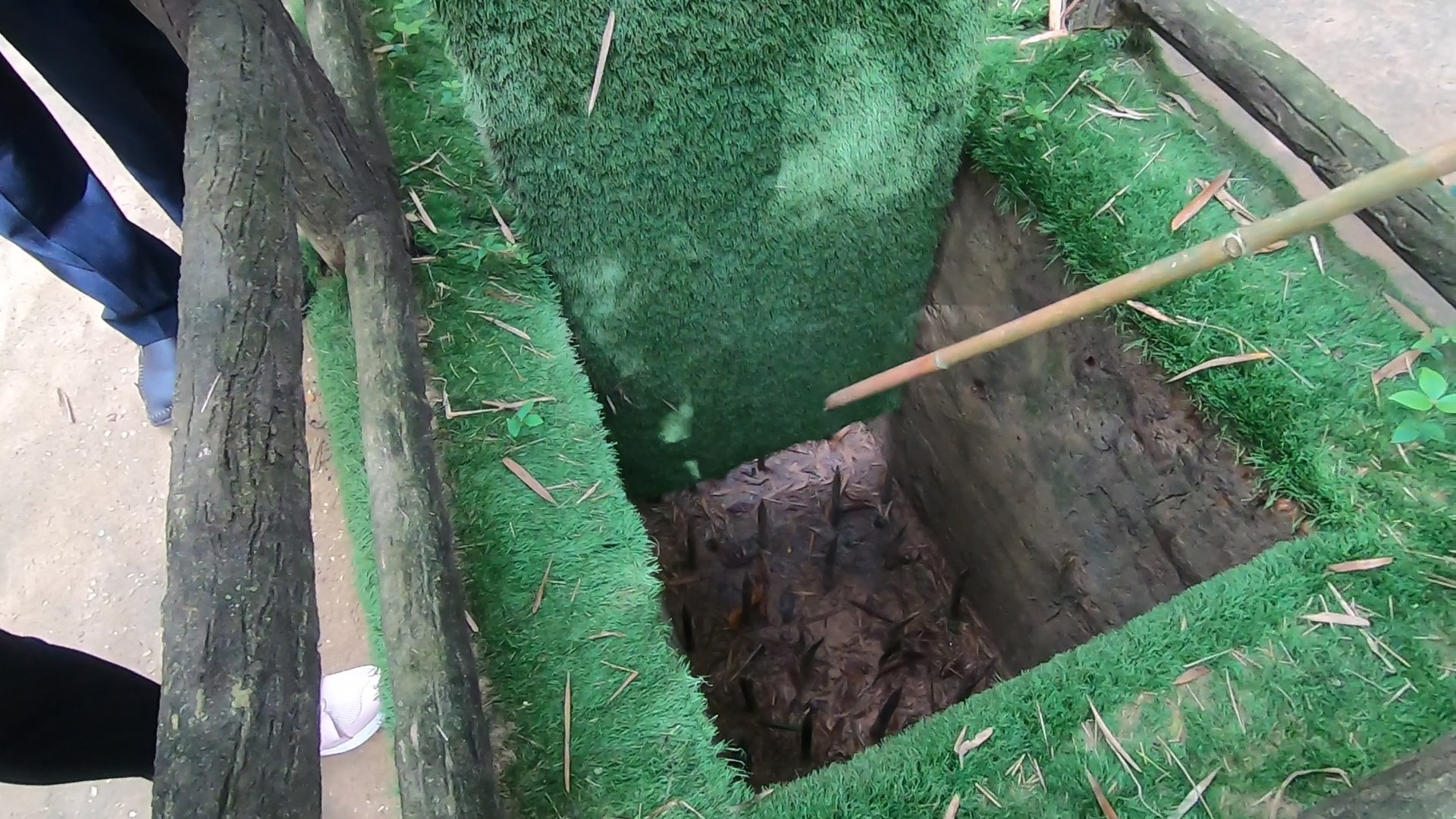
Among the most feared defenses were the simple yet devastating spike traps. Hidden beneath leaves or thin layers of soil, these pits were lined with sharpened metal spikes designed to pierce deeply into a soldier’s leg or ankle if triggered. Beyond the immediate injury, the spikes were often deliberately contaminated with dirt or waste to increase the risk of infection, turning even a small wound into a serious threat.
Tripwire grenade traps created another layer of constant danger. A nearly invisible wire stretched across narrow pathways could trigger an explosive the moment it was touched. In the confined space of a tunnel or forest path, such traps could cause severe casualties within seconds.
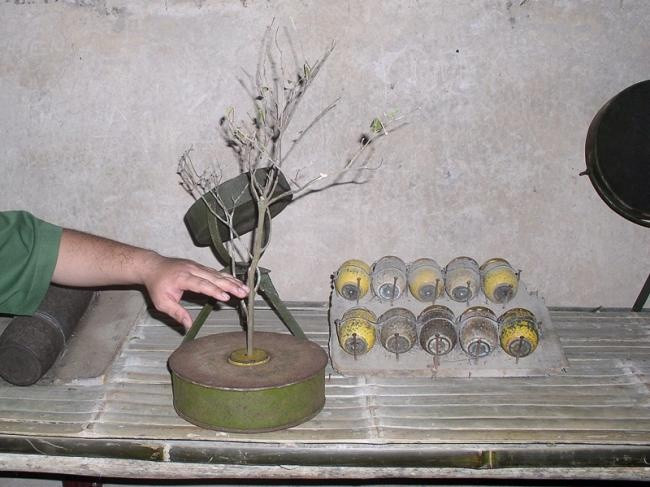
Nature itself also became part of the defense strategy. Venomous snakes, scorpions, and even disturbed beehives were sometimes used to attack intruders in tight spaces where panic could spread quickly. These natural “biological weapons” amplified the psychological fear already associated with the tunnels.
Despite facing one of the most technologically advanced militaries in the world, the defenders relied on creativity to counter modern tactics. When American forces deployed trained dogs to detect tunnel entrances and ventilation shafts, local fighters devised a clever response. They placed American soap or clothing taken from fallen soldiers near these openings to confuse the dogs’ sense of smell. In this constant battle between technology and ingenuity, the handmade traps of the Cu Chi Tunnels became a powerful symbol of resourcefulness and determination.
What to Expect on a Cu Chi Tunnels Tour
Standing Where History Was Lived and Remembered
Visiting the Cu Chi Tunnels is far more than a typical sightseeing stop. It is an opportunity to step into a place where history was once lived every single day. As you walk through the site, experienced guides share powerful stories about the resilience, culture, and wartime life of Vietnam, turning the visit into a meaningful journey through the country’s past.
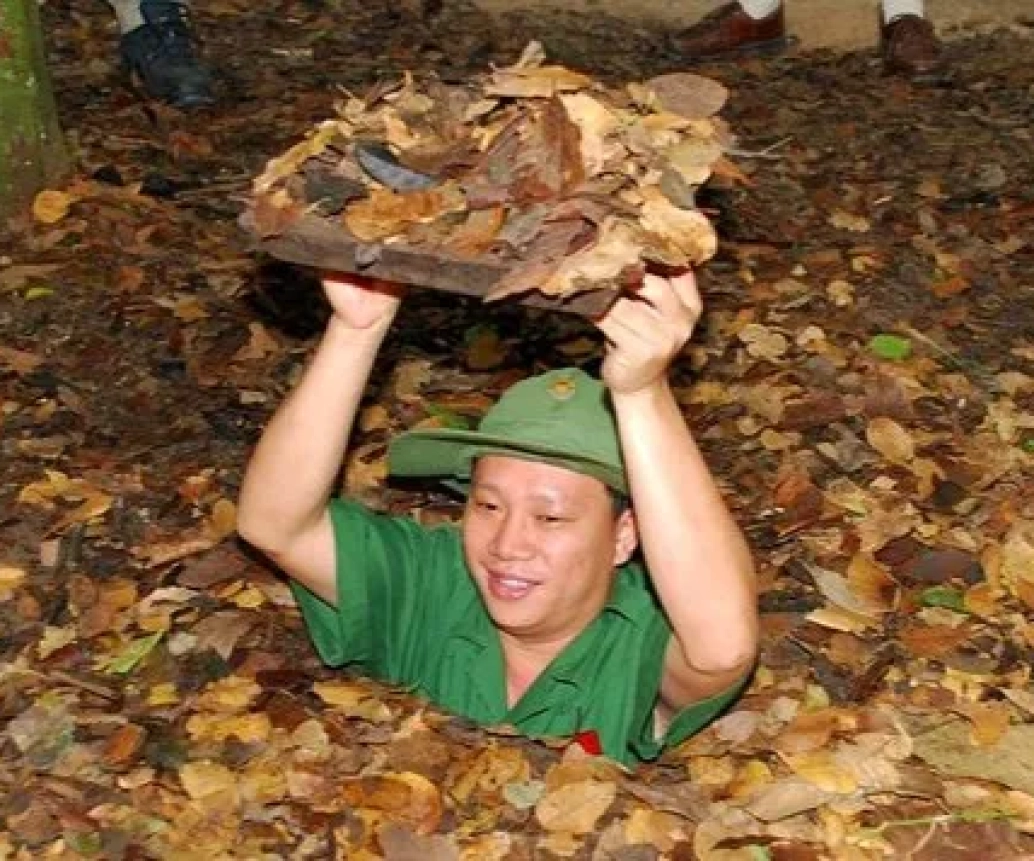
One of the most unforgettable parts of the experience is entering the narrow tunnel entrances themselves. Visitors can descend through small hidden trapdoors and crawl through sections of the underground passages, gaining a firsthand glimpse of how people lived beneath the earth during the war. Inside these tight spaces, the air grows cooler, the light fades, and the reality of underground life becomes vividly clear.
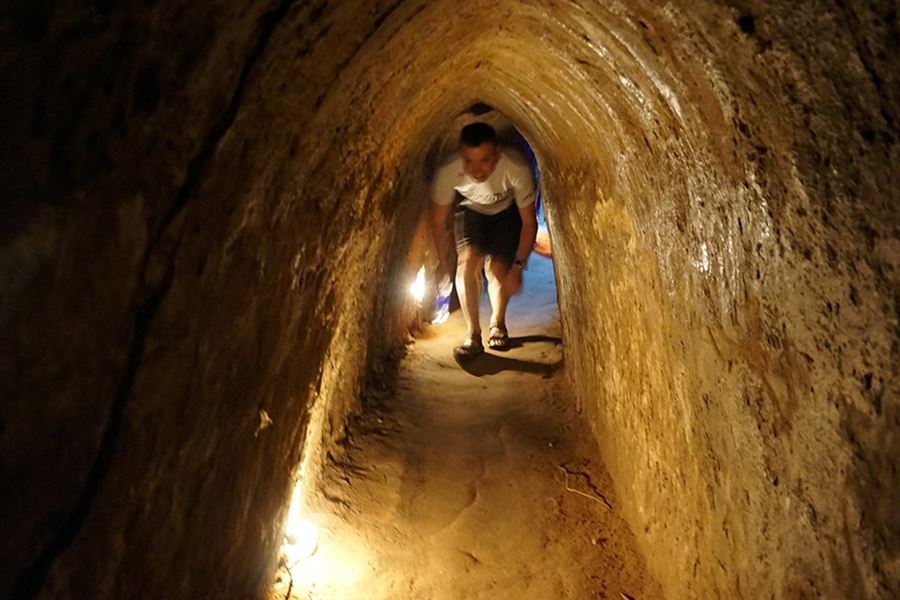
This immersive moment helps travelers understand the extraordinary challenges Vietnam faced during wartime. More importantly, it reveals the remarkable determination of ordinary people who endured unimaginable hardship with courage and resourcefulness. Standing here, many visitors leave not only with historical knowledge but also with deep admiration for the resilience of the Vietnamese people.
Wartime Food Tasting
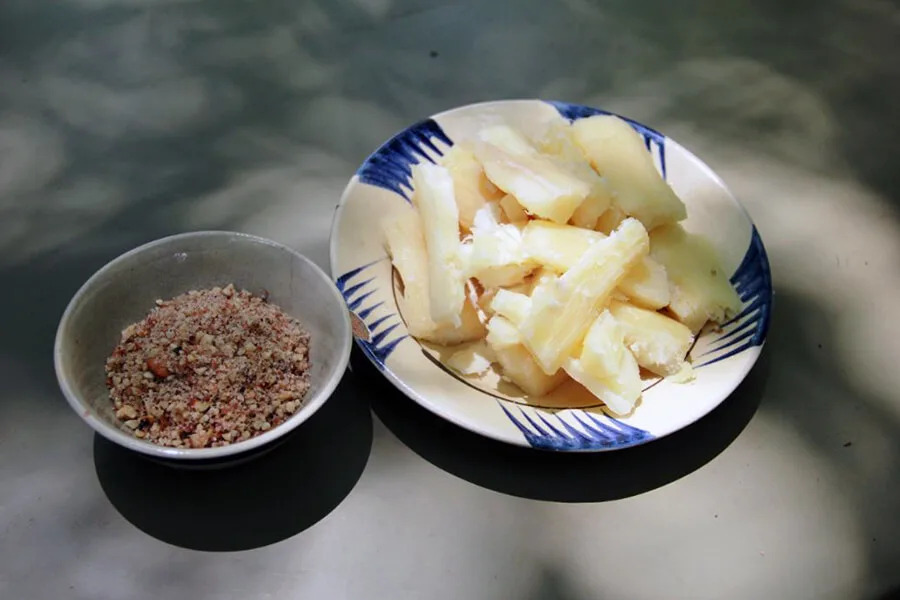
Another meaningful experience when visiting the Cu Chi Tunnels is tasting the simple food that once sustained soldiers and local residents during the war. Cassava, a humble root crop, became one of the most common meals for those living and fighting in the tunnels.
Visitors are often invited to try small pieces of steamed cassava served with warm tea, recreating the basic wartime diet. Though modest in appearance, this dish represents the perseverance of people who survived on minimal resources while facing one of the most technologically advanced militaries in the world. Through this small culinary moment, travelers gain a deeper appreciation for the strength and endurance behind Vietnam’s wartime history.
Shooting Range and Optional Activities
For visitors interested in a more interactive experience, the site also offers optional activities that add another dimension to exploring the Cu Chi Tunnels. One of the most popular attractions is the shooting range, where participants can handle historical weapons used during the war, such as the AK-47 and the M16 rifle, under the careful supervision of trained staff.
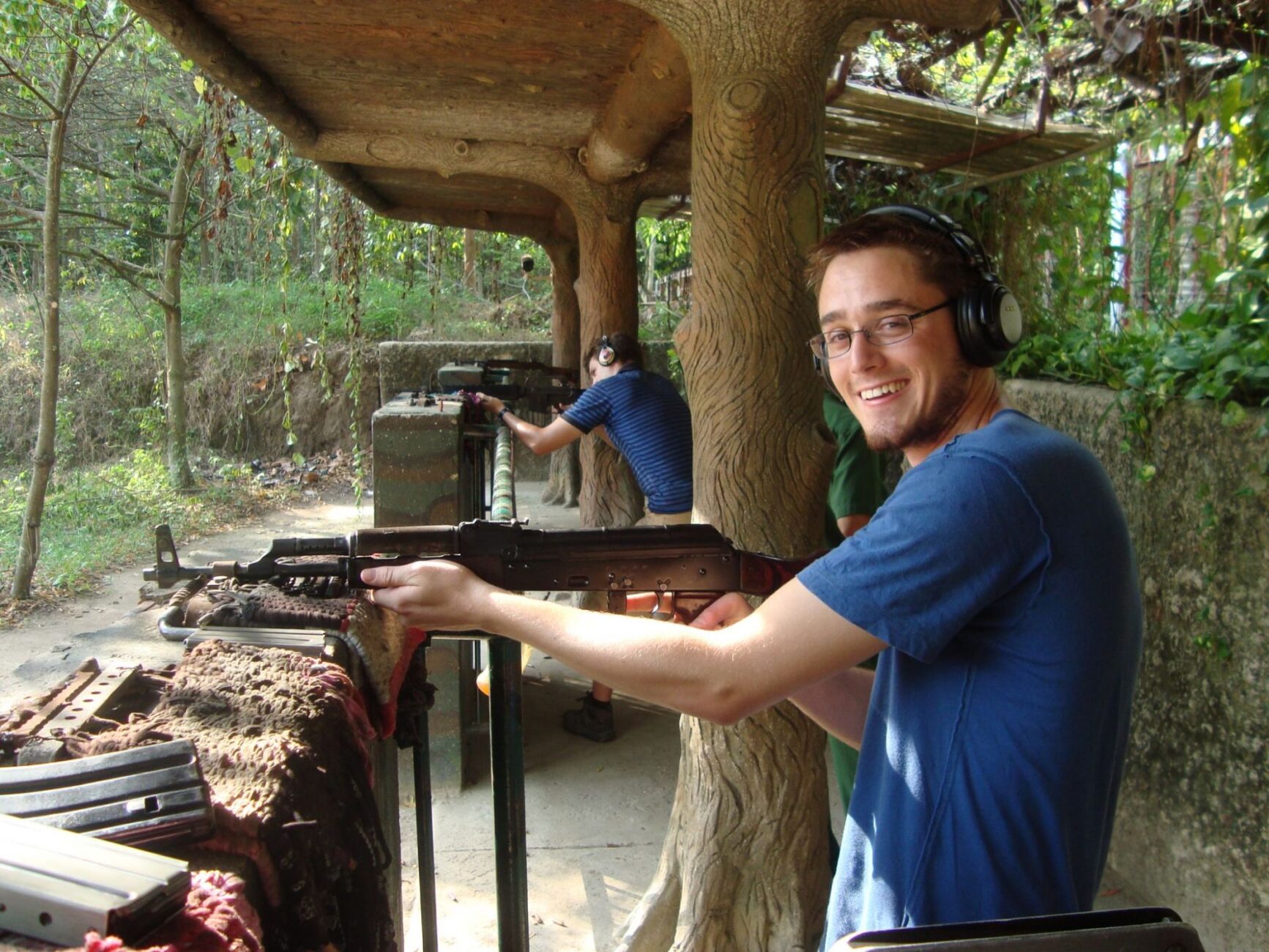
Beyond the shooting range, visitors can also participate in paintball-style war simulation games held in the surrounding forest. Equipped with protective masks, uniforms, armor, and paintball guns, participants work together in team-based scenarios that recreate the strategic coordination once required during wartime. These activities provide an exciting way to experience teamwork, tactical thinking, and a glimpse of the fighting spirit that shaped the history of this remarkable place.
Exploring the Cu Chi Tunnels is more than visiting a historical site. It is a journey into the heart of Vietnam’s past, where courage, ingenuity, and resilience shaped one of the most remarkable wartime stories in the world. Walking through the narrow tunnels, listening to powerful historical accounts, and experiencing the environment where soldiers and civilians once lived offers a perspective that no textbook can fully capture.
If you are planning to discover Ho Chi Minh City or explore other incredible destinations across Vietnam, let ACT Travel help design the perfect journey for you. From immersive historical tours to customized travel experiences throughout the country, our team is ready to craft an itinerary that matches your interests and travel style.
Contact ACT Travel today and start planning your unforgettable Vietnam adventure.
Read this next


Dong Van Stone Plateau recognised as world geopark

Quick Contact
Reviews from Customers
Please take a look at the following reviews from our customers
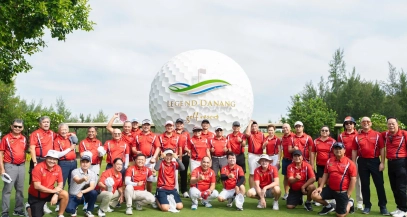
Mr Clarence- Travel President, Philippines
Vietnam | 01/14/2026
Luxury Golf Tour in Da Nang, 5days
Hi Jimy, We returned home safely today. I would like to say a special thanks to you and your team ACT TRAVEL. We really loved and satisfied with your pro services. We do love these golf courses in Da Nang. They were amazing and fantastic quality and view. We will come back here soon. I am looking foward to working together with you soon! Best regards, Mr Clarence- Travel President, Philippines
Mr. Jean Pie
United Kingdom | 10/13/2014
RAM Holidays from UK (Impressive of Vietnam 15 days)
Mr. Jean Pie – Tour Leader said “Thank you very much for doing such an excellent job on the tour. You went above and beyond for all of us and we really appreciate all your hard work. Thank you for your calm leadership through the “HAIYAN” storm, you really help us through it. Thanks to ACT Travel, we had a wonderful time and unforgettable memory”.
Mr. Navy Vang
Australia | 10/13/2014
Mandarin Group from Australia (Charming Vietnam 10 Days)
Mr. Navy Vang - Tour manager from Australia said: " Wow what a great vacation !. Thank you Mr Kelvin Pham so much. We are very grateful for everything you did for us and everything went very well. We’re safe and sound back home thinking about the joy we experienced. I've already decided that when I choose to travel again, I will go through your company. I also highly recommend ACT Travel Travel to any organization looking for a great agency. Kind regards
Mr. Ricardo - Program Manager
Brazil | 03/31/2014
DOMINGOS Group from Brazin (IMPRESSIVE VIETNAM 17 DAYS.)
Mr. Ricardo - Program Manager said “Dear Kelvin, Thanks you very much for your well arrangement. Thank you for the updated weather information. I have traveled a lot as a geography professor and dealt with many tour operators. You are one of the best tour operators who can take so much concern and care about customers. I must congratulate you on your good organization and care to minute points. Thanks for the mobile phone you provided to us and SIM cards you provide to all of us (29 cards, I know they are not cheap), it was an excellent convenience for us. It was a brilliant idea and we really appreciated knowing there was someone we could contact at any time should we need to. We love your welcome dinner at Binh Quoi village, where we enjoyed rich traditional southern Vietnamese cuisine with musical accompaniment provided by local folk musicians. We were very interested in the traditional Vietnamese wedding in Binh Quoi and we never forget the “Gong show” in Buon Me Thuot. Once again, thank you very much for great job”.
Ms. Barbara Betts
Australia | 10/13/2014
Orbiz Group from Australia (Discover Vietnam and Cambodia 15 Days)
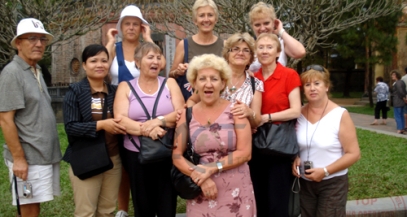
Ms. Barbara Betts - Escorted guide from Australia said: " Dear Kelvin I want to take this opportunity to thanks you for providing us with superb guides in Vietnam and Cambodia. Well, Manh - tour guide in Vietnam is very professional and knowledegable and you can feel very safe in allowing him to guide your tours. The drivers you provided were also friendly, capable and they too did everything for the group to be happy Thanks you Kelvin so far for a fabulous tour.
Mr. Dany
Malaysia | 10/13/2014
Teachers Group From Malaysia ( Hanoi – Halong bay – Ninh Binh 6 Days )
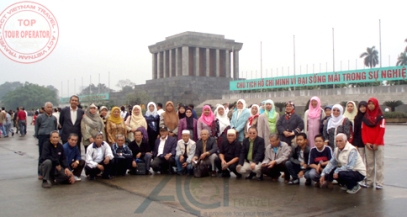
Mr. Dany - Escorted guide from Malaysia said: " Hi Kelvin Pham, Thanks for arranging a great trip. I wanted to let you know how pleased we were with the itinerary and all the arrangements you organized. Everything worked extremely well and went exactly as planned. The guides were very knowledgable. My favorite site was cruising on the Halong bay. The hotels were great as they were located at the heart of city. We did enjoy eating at the local restaurants as arranged by ACT. The foods were sometimes unusual, but still tasty. I loved “Pho Hanoi“ very much and I would try to cook at my home… Thanks again
Mr. Ohad
Turkey | 10/13/2014
Istmaz Group from Turkey (Saigon - Mekong Delta - Cambodia - Angkor Wat 12 Days).
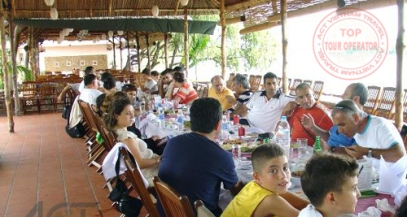
Mr. Ohad - The Tour Leader said: " On behalf of the entire group, I just wanted to thank both of you for all your help and outstanding execution in making our trip memorable! The entire group could not say enough great things about how well organized & smooth everything went. I really enjoyed Vietnam & Travel. Both tour guides were terrific and Angkor Wat was just amazing! All your arrangements worked out very smoothly and I consider the pilgrimage to be a great success ".
Mr. Steven
United Kingdom | 10/13/2014
Ponila Group from UK (Higlight of Vietnam 16 Days).
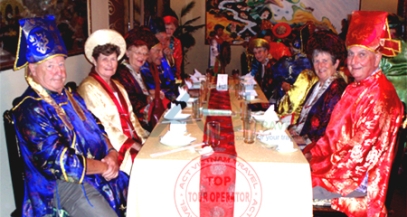
Mr. Steven - Escorted guide from UK said: Our trip to Vietnam was overall a positive one. We were very happy with the level of accommodation and quality of the food at all times. We love Hanoi but Ha Long Bay is certainly one of the most beautiful places we have ever seen; the old city in Hoi An has great potential becoming a world-class tourist attraction; and citadel in Hue embodies a great deal of historic signifance, we have a lot of photos in Hue. Cruising on Mekong Delta river was so interesting and Dalat highland was very romantic. Finally, please give our thanks to the tour guides Mrs Phuong, Mr Ky and the drivers who accompanied us throughout, always accommodating to the group's requests and last minute changes in itinerary. We won't forget you!
Mr. Barrick
United States | 10/13/2014
Global Alliane Group From USA (Discover Vietnam – Cambodia 10 Days)
Mr. Barrick - the Tour Leader said: " Dear ACT Team,This is to thank you, and all of those who organised and guided our visit to Vietnam & Cambodia, for a superb holiday. We had a trip of a life time. Everything we were promised happened and more. We brought back so many memories and stories. The restaurants were wonderful and the hotels were great. Mr Nguyen had such a lot of knowledge he shared with us, and had a great sense of humor. He even knew of some Cambodian slang words. The whole trip will be something we will always remember and share with our family and friends. Thanks for all your help in making it so enjoyable. We shall tell all our friends traveling to Indochina that they must use ACT Travel's services !! ".
Partner





ACT VIETNAM TRAVEL
No 3, Alley 25, Dich Vong Hau Str, Cau Giay Dist, Hanoi Capital, Vietnam
sales@vietnamtraveland.com - jimy@vietnamtraveland.com - vip@vietnamtraveland.com
License: 01-639/2015/CDLQGVN-GPLHQT
Company
Term of use
Payment Methods


